This review is an updated and expanded English translation of our original German review of the Dinosaur Project, first published in 2015 — yes, that was a long time ago.
A British expedition into the Congolese jungle. A teenage stowaway. A helicopter full of cameras. And somewhere out in the undergrowth, something that has no business still being alive. On paper, The Dinosaur Project is exactly the kind of found footage film that should be a guaranteed good time — high concept, exotic location, prehistoric monsters. The premise practically pitches itself.
Man, I really wanted to like this one.
The Dinosaur Project (2012)
The Story: A British cryptozoological expedition travels to the Congo Basin in search of the legendary Mokele-mbembe. Their helicopter is attacked mid-flight by something large and unknown. What they find in the jungle after the crash is considerably more dangerous — and considerably more real — than anyone anticipated.
🎬 Our opinion: A genuinely exciting concept undone by weak tension, unconvincing found footage mechanics, and a story that never generates the dread it needs. The CGI dinosaurs are better than you’d expect for the budget. Everything else is a missed opportunity.
Director: Sid Bennett · Cast: Richard Dillane, Matt Kane, Natasha Loring, Peter Brooke
Watch it
Powered by JustWatchWhat The Dinosaur Project Is About
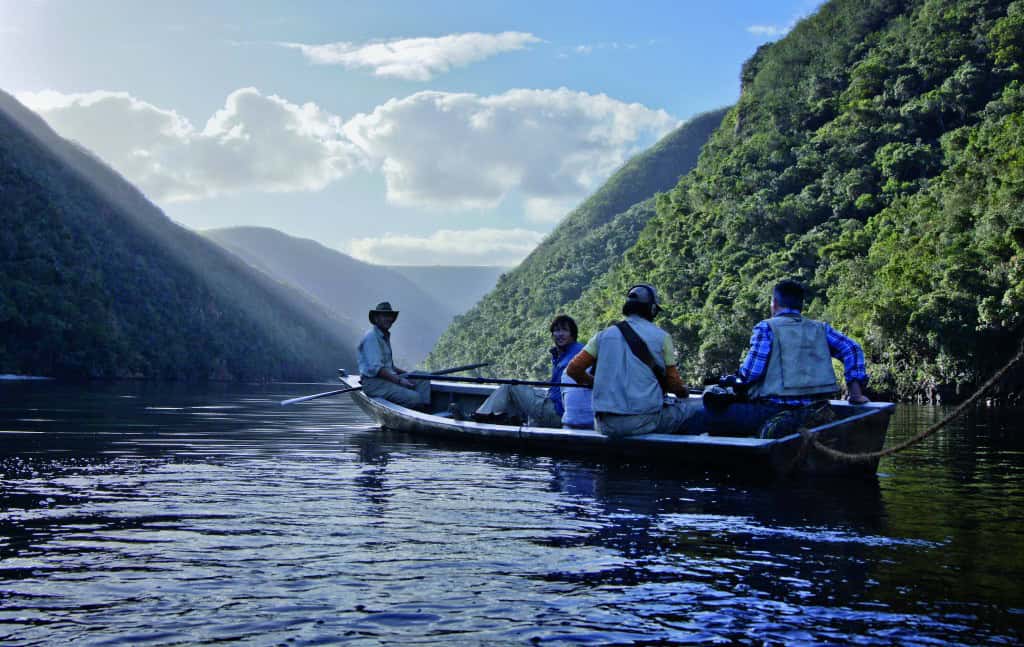
Lead researcher Jonathan Marchant is heading a British cryptozoological expedition into the Congo Basin — specifically to investigate local reports of a creature known as the Mokele-mbembe, a legendary river beast described by indigenous witnesses for over a century, and believed by some to be a surviving sauropod or plesiosaur. He is accompanied by a doctor, a TV crew, and a cameraman. He is not accompanied by his teenage son Luke — who stows away on the expedition helicopter anyway.
Before Jonathan has time to deal with that particular problem, the helicopter is attacked by a large flock of unidentified flying creatures and crashes deep in the jungle. The crew survives. The equipment survives. And in the undergrowth around the wreckage, something is moving. Something that has, by all available scientific understanding, been extinct for 65 million years.
What follows is a survival story — father and son, an increasingly fractured crew, and a hidden valley full of dinosaurs that have no interest in being documented.
The Dinosaur Project Trailer
Review: The Dinosaur Project (Spoiler-Free)
There is a version of this film that works. You can almost see it — the bones of something genuinely exciting buried under the decisions that were actually made. A cryptozoological expedition, a lost valley, a father-son dynamic played against the backdrop of prehistoric survival horror. This could have been a proper creature feature in found footage clothing.
It isn’t, quite. But it’s worth understanding why.
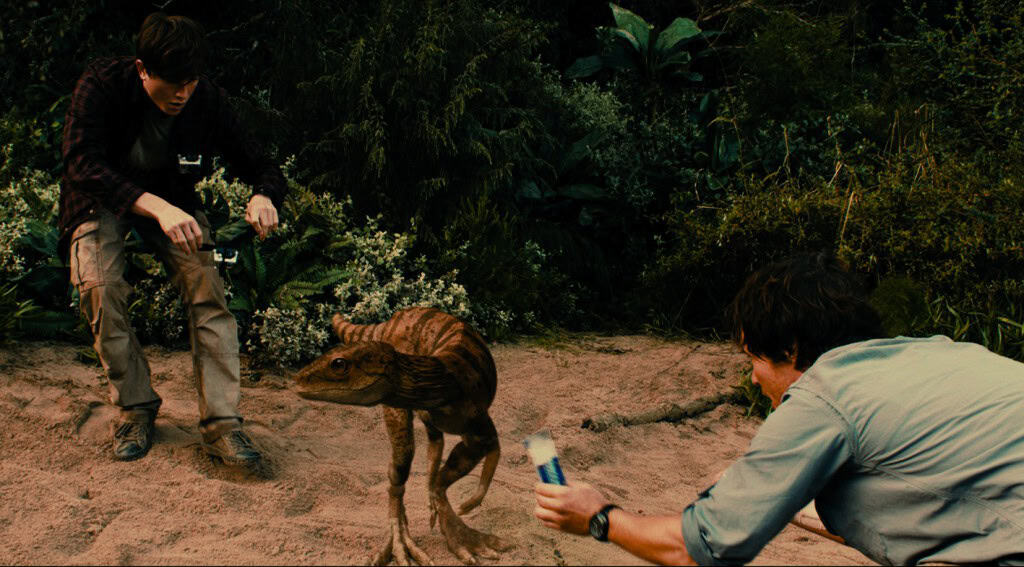
Director Sid Bennett came to this project from documentary filmmaking — he had worked on CGI-heavy natural history productions, including work adjacent to the Walking with Dinosaurs world — and that background shows in both the film’s strengths and its weaknesses. The dinosaurs look genuinely good. For a British independent production with a modest budget, the visual effects hold up in a way that surprised me. The pterosaur attack on the helicopter, in particular, has a scale and chaos to it that earns its place.
But where Bennett’s documentary instincts should have helped — building tension, letting silence and environment do the work — the film curiously fails to generate much dread at all. Scenes that should be frightening play as merely eventful. The jungle closes in around the crew and yet the film never quite convinces you that anything truly terrible is about to happen. There is spectacle here, but not much suspense.
Part of the problem is the found footage framing itself. Found footage lives or dies on its sense of authenticity — the feeling that this could be real — and The Dinosaur Project undermines itself repeatedly. The crew is equipped with an implausibly sophisticated array of cameras: professional rigs, motion-sensor cameras, night vision, cameras mounted on remote-controlled vehicles. It looks more like a production than a documentary. By contrast, the original wave of found footage — Blair Witch, Cloverfield, Paranormal Activity — worked precisely because it felt like anyone could have shot it. The lo-fi aesthetic was the point. Here, the production values actively work against the conceit.
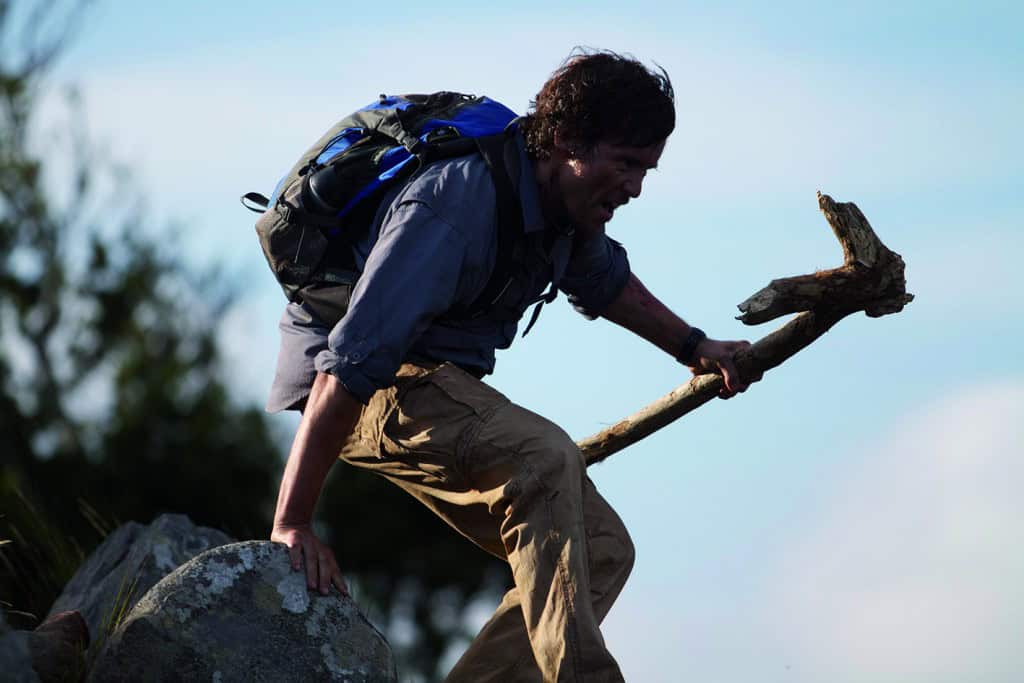
The characters don’t quite land either. Luke, the teenage stowaway, is positioned as the emotional centre of the film — a kid who bonds with a young dinosaur in a sequence that feels borrowed from a family adventure film rather than a survival horror — and Matt Kane does his best with the material, but the character isn’t written with enough depth to carry the weight placed on him. Richard Dillane as Jonathan Marchant brings some authority, and the father-son tension is the film’s most functional emotional thread, but it too never fully ignites.
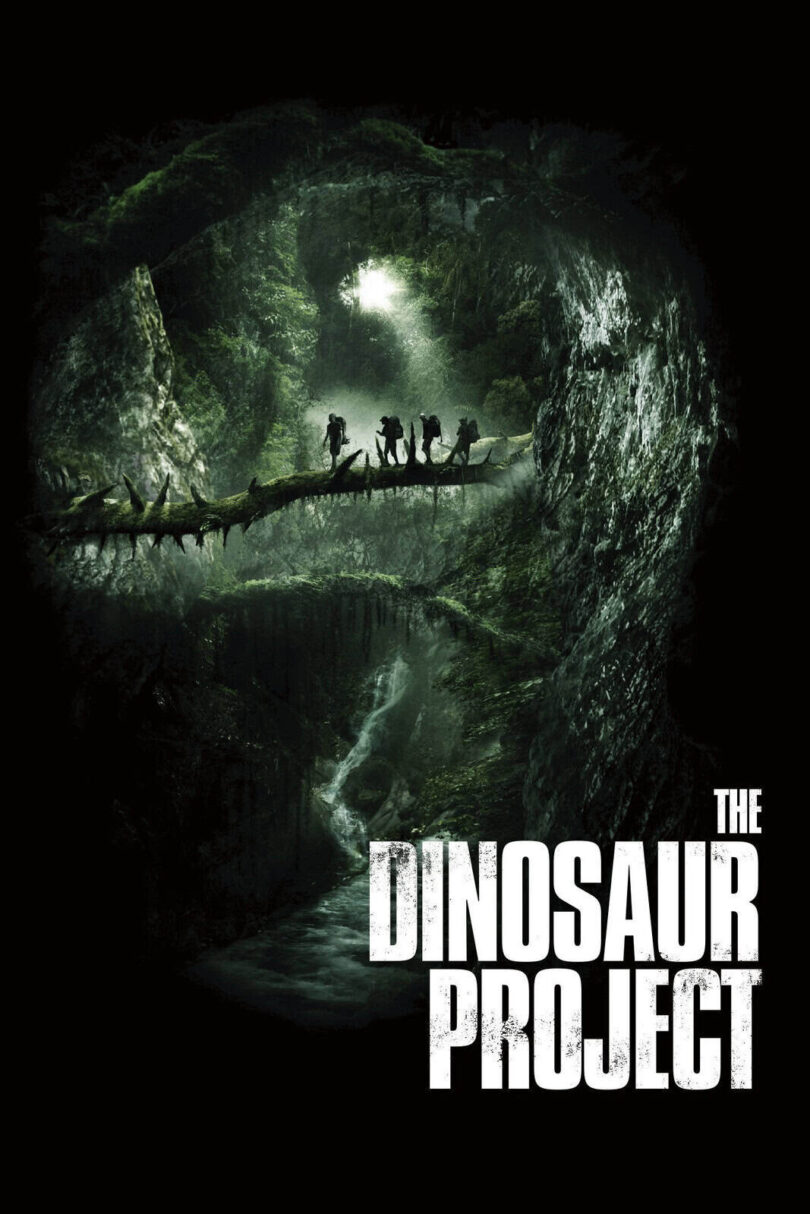
And then there’s the cover. I shouldn’t spend review space on DVD artwork, but it deserves a mention: the back cover prominently features a dinosaur that does not appear in the film. That’s not a spoiler, it’s a warning.
Did you know?
The Mokele-mbembe is a real legend — and people have genuinely gone looking for it. The creature at the heart of The Dinosaur Project is not invented for the film. The Mokele-mbembe is a legendary creature described in oral traditions across the Congo Basin for centuries — typically described as a large, long-necked animal that lives in rivers and lakes and is feared by local communities. Cryptozoologists have mounted multiple expeditions into the region since the 1980s, none of which have produced conclusive evidence.
Director Sid Bennett, who developed the concept after reading a Sunday Times article about one such expedition, was drawn to the idea that whoever came back from the Congo with real proof would make the biggest scientific discovery in history. The film was shot not in the Congo but in South Africa, which stood in convincingly enough for the jungle. The visual effects were provided by Jellyfish Pictures, a UK studio with serious natural history credentials.
Verdict
The Dinosaur Project is a film that had every ingredient for something memorable and didn’t quite assemble them into anything that sticks. The CGI is better than the budget deserves, the concept is genuinely compelling, and there are moments of real scale. But the found footage mechanics undermine the premise, the tension never builds the way it should, and the characters aren’t drawn with enough depth to carry you through the lulls.
Worth watching once if dinosaurs and found footage are both in your wheelhouse. Don’t go in expecting to be frightened — go in expecting to be mildly entertained, and you might just be.
Where to Watch The Dinosaur Project
Powered by JustWatchSimilar Movies to The Dinosaur Project
If prehistoric creatures and found footage is a combination that speaks to you, these are worth your time — some of them lean into the horror, others into the spectacle, but all of them share the same essential premise: something out there is very much alive, and the camera is the only witness.
Cloverfield (2008) — The gold standard for found footage creature features. A giant monster attacks New York, witnessed entirely through a handheld camera held by civilians trying to survive. Where The Dinosaur Project goes for wonder, Cloverfield goes for pure terror. The scale, the chaos, and the decision to never fully explain what the creature is or where it came from remain enormously effective.
The Bay (2012) — A different kind of creature, a different kind of threat — parasitic organisms rather than dinosaurs — but the same documentary format and the same sense of an ecosystem turning against its human inhabitants. Barry Levinson’s environmental horror is considerably more unsettling than its concept suggests.
Exists (2014) — Eduardo Sánchez, co-director of The Blair Witch Project, returns to the found footage format with a Bigfoot film that takes the creature seriously. Where The Dinosaur Project flirts with wonder, Exists is purely about fear. One of the better creature-based found footage films of the decade.
Trollhunter (2010) — The Norwegian mockumentary that does for trolls what The Dinosaur Project attempted with dinosaurs — and pulls it off considerably more effectively. A group of student filmmakers discovers that a government troll hunter is real, and that the creatures he hunts are enormous. Funny, tense, and visually inventive. Essential viewing.