This review isan updated and translated version of our 2016 German review of Five: Find Your Limit, which was originally published on found-footage.de (now .com/de).
The idea is a good one. Five people walk into an abandoned hospital for the night. They don’t know what’s going to happen. The director knows. The actors don’t. Somewhere in that gap between scripted chaos and genuine reaction, something interesting is supposed to emerge.
Whether it actually does is where I start to part ways with the original review of this film — which gave it an 8.3 and called it “great”. I found myself watching the clock instead. This review was first published on found-footage.com in 2016 — updated and expanded for our English audience.
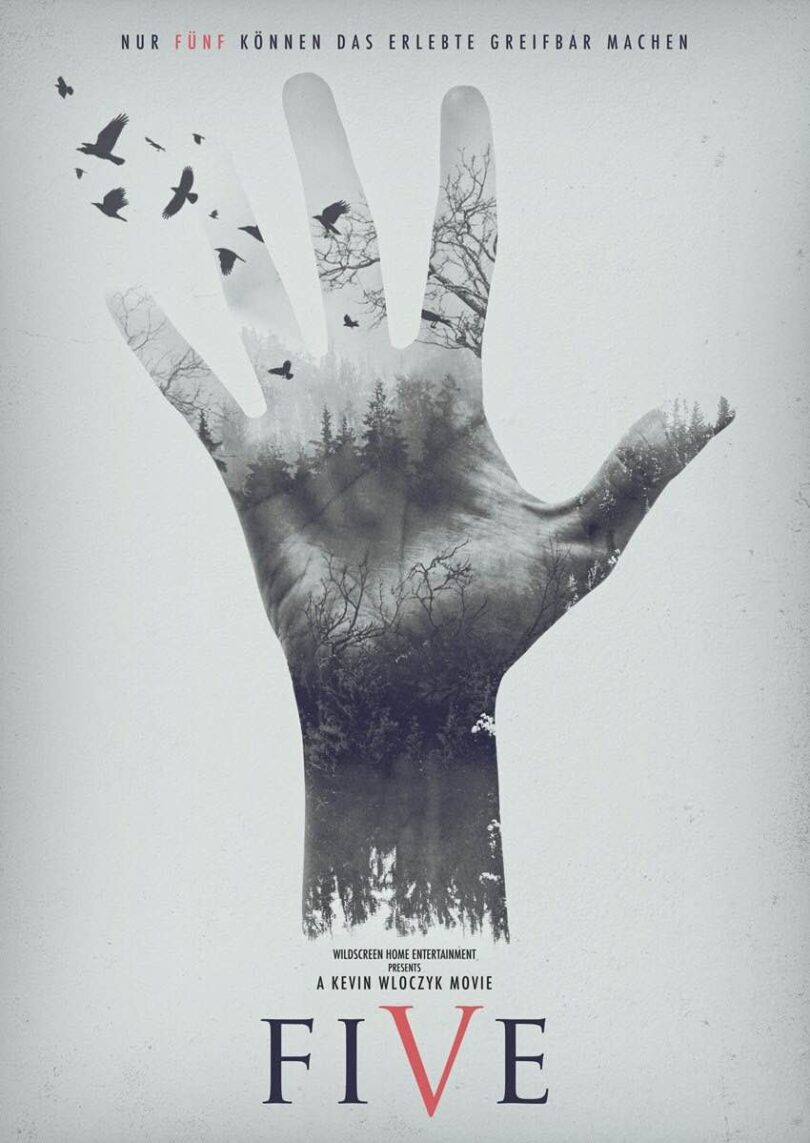
Five: Find Your Limit (2016)
The Story: Five contestants enter an abandoned psychiatric hospital for the night to take on challenges and tasks — none of them knowing what awaits them. A film crew records everything. The footage that emerges is disturbing.
🎬 Our opinion: A genuinely clever concept, committed performances, and a last act that finally delivers some tension. But getting there requires surviving a middle section that tests your patience more than any horror film should. The no-script approach works in theory — in practice, you feel it most when nothing is happening.
Director: Kevin Wloczyk · Cast: Anders Hasselroth, Marco Klammer, Oliver Peter Kaiser Troska, Ilse Lang
Watch it
Powered by JustWatchWhat Five: Find Your Limit Is About
The setup is simple and smart. Five people agree to participate in an experiment. They’re sent to an abandoned psychiatric hospital for the night and told to complete challenges and tasks together. What those challenges are, they won’t know in advance. Neither, apparently, will they know much about anything else — because director Kevin Wloczyk kept his cast deliberately in the dark about what was coming next.
The script existed — but only the production knew it. The actors were reacting to things genuinely, in real time. The idea is that the authenticity of their responses couldn’t be faked, so why try? Just don’t tell them what’s happening and film what comes out.
It’s a concept with real potential. Found footage lives and dies on whether you believe the people on screen. Strip away rehearsed reactions and you might just get something genuinely unsettling.
The Five: Find Your Limit Trailer
Review: Five: Find Your Limit (Spoiler-Free)
I want to be fair to this film, because the concept really is good. Keeping your cast genuinely unaware of what comes next isn’t a new idea — The Blair Witch Project did something similar, to extraordinary effect. And when it works here, you can feel it. The cast’s reactions in the later stages of the film have a rawness that you simply cannot manufacture in a traditional shoot. When the pressure finally arrives, you believe what you’re seeing.
The problem is getting there.
The first hour of Five: Find Your Limit is, to be honest, mostly people wandering around an abandoned hospital completing tasks. The authenticity of the reactions is real. But authentic reactions to nothing particularly interesting are still nothing particularly interesting. Found footage needs atmosphere, dread, a creeping sense that something is wrong — and for long stretches, this film substitutes activity for tension. Things happen. They just don’t scare you.
The location, to its credit, does some of the work. An abandoned psychiatric hospital at night is inherently unsettling, and the production makes reasonable use of it. Dark corridors, flickering lights, the kind of institutional decay that makes your skin crawl without any help from a script. If the film had leaned harder into the atmosphere of the location itself, it might have carried the quieter stretches more effectively.
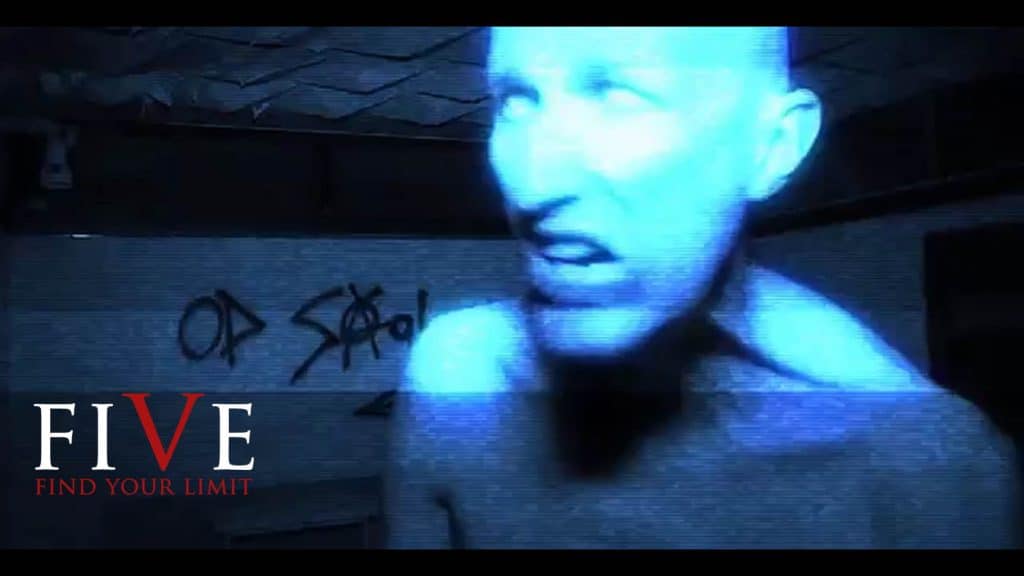
There is also the question of music. The original German review flagged this as a single minor criticism. I’d go further — scoring found footage is always a gamble, and here it occasionally tips the balance in the wrong direction. The moments that should feel raw and documentary-like are nudged towards conventional horror-film territory by the soundtrack, which undercuts the very thing the no-script approach was trying to achieve. You can’t have it both ways.
And then — finally, in the last stretch — something happens. The film finds its nerve. The escalation that the first hour was presumably building towards arrives, and it is, genuinely, worth watching. The actors respond to it in a way that feels real, because it probably was. This is the film that Five: Find Your Limit wanted to be all along. It just takes a very long time to get there.
Did you know?
The actors had no idea what was coming. Director Kevin Wloczyk wrote a full script — but only shared it with the production team. The five participants knew they were entering an abandoned hospital and would face challenges. Everything else was a surprise. According to Wloczyk, this was a deliberate choice to get reactions that couldn’t be faked: “There will be a script, but only for the production.” It’s the same logic The Blair Witch Project used in 1999 — and it’s still one of the most interesting approaches in found footage filmmaking.
Verdict
Five: Find Your Limit is a film with a genuinely good idea at its core and a last act that justifies a degree of patience. The no-script approach produces real performances, and the final stretch of the film delivers the tension the concept always promised.
But sixty-something minutes is a long wait for thirty that work. If you’re willing to sit through a slow burn that occasionally forgets to smoulder, there’s something worth finding at the end. Just don’t go in expecting the whole film to match the idea behind it.
Where to Watch Five: Find Your Limit
Powered by JustWatchSimilar Movies to Five: Find Your Limit
If the human experiment angle is what drew you in, these films share some of that same DNA — people placed in controlled situations that quickly stop being controlled. Some lean harder into horror, some into psychological dread. All of them have more momentum than the film above.
The Blair Witch Project (1999) — The grandfather of the keep-your-actors-in-the-dark approach. Three student filmmakers, an improvised script, genuine exhaustion and fear. Still one of the most effective found footage films ever made, and the reason films like Five exist at all.
Hell House LLC (2015) — A haunted house attraction that goes catastrophically wrong. Like Five, it’s set in a single creepy location and builds slowly — but where this one succeeds is in making the atmosphere do the heavy lifting from the very first frame.
Grave Encounters (2011) — A ghost-hunting TV crew locks themselves into an abandoned psychiatric hospital for the night. Yes, really — same setting, different film, considerably more going on. Campy in places but delivers on its premise far more consistently.
The Atticus Institute (2015) — A mock-documentary about a 1970s parapsychology institute and what happens when their experiment goes badly wrong. More polished than most in this corner of the genre, and genuinely unsettling in ways Five only occasionally manages.