József Gallai had already impressed us twice. Bodom was a tense, atmospheric mystery. Moth doubled down on that same unsettling energy. So when the Hungarian director announced a third found footage film — this time a dark comedy-horror about a man methodically planning to kill his ex-girlfriend — the expectation was high. And this time, he went somewhere completely different.
Different, and surprisingly effective. This review expands on our original German review from 2016 — updated and rewritten for our English audience more than a decade on.
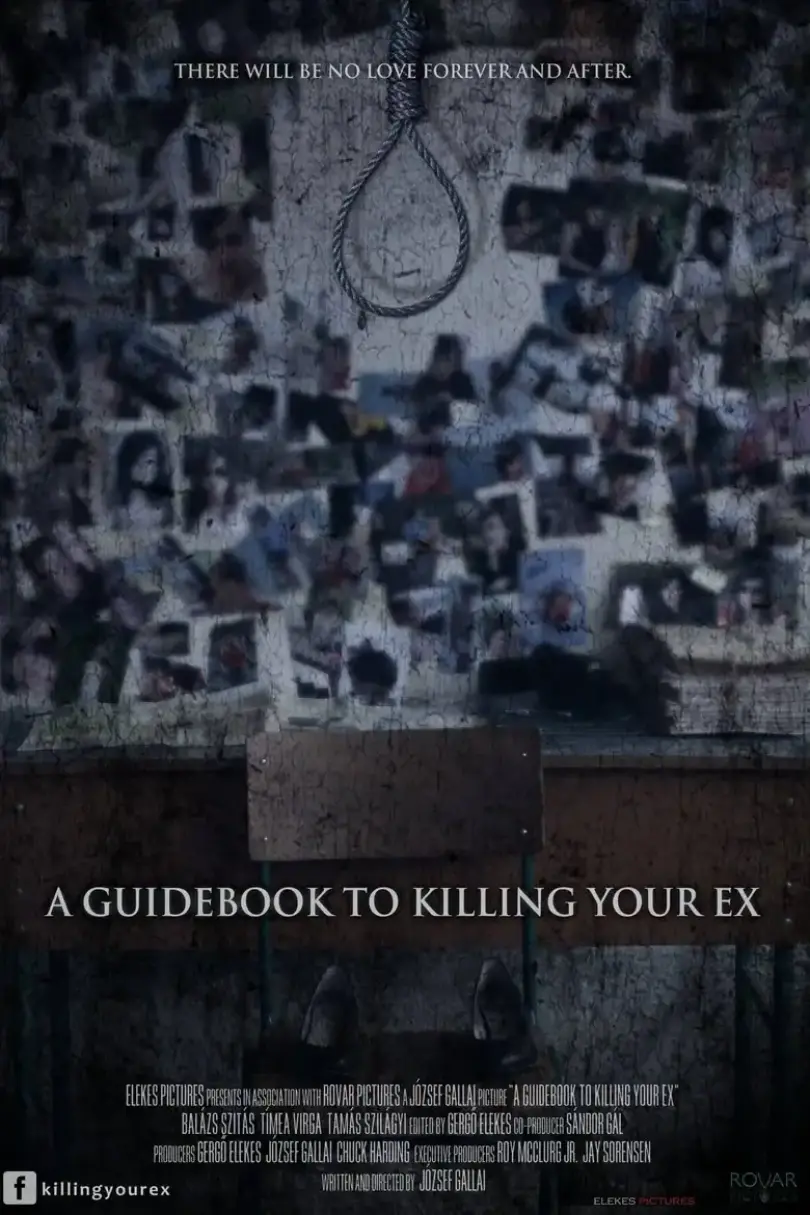
A Guidebook to Killing Your Ex (2016)
The Story: A lonely, disturbed man — let’s call him John Doe — has decided to kill his ex-girlfriend. Not someday. Within the next 72 hours. And because he believes this is a situation other men might find themselves in, he decides to document every step as a kind of instructional video series for like-minded individuals.
🎬 Our opinion: An outstanding lead performance carries a film that had no business being this good. Dark, uncomfortable, and consistently gripping — Gallai’s third found footage feature is his most unusual and arguably his most impressive. Not for everyone, but for the right audience, genuinely hard to shake.
Director: József Gallai · Cast: Balázs Szitás, Tímea Virga, Tamás Szilágyi
Watch it
Powered by JustWatchWhat A Guidebook to Killing Your Ex Is About
John Doe is not doing well. He’s lost his mother. He’s lost his job. And four years ago, he lost his girlfriend — a separation he has manifestly failed to move on from. In fact, he’s done the opposite: he’s spent four years moving closer to the edge, and now he’s gone over it.
His plan is clear. Within 72 hours, his ex-girlfriend will be dead — along with her new boyfriend, who will not be getting a pass. And because John believes this kind of situation must arise more often than people admit, he’s decided to film the whole thing as a practical tutorial. Tips, observations, advice for the aspiring stalker. Delivered to camera, methodically, by a man who seems entirely serious about all of it.
What follows is 71 minutes of found footage presented as recovered police file material. We watch John surveil his ex’s apartment, acquire a weapon, and talk directly to us — his intended audience of fellow wronged men — about the importance of preparation and attention to detail.
The A Guidebook to Killing Your Ex Trailer
Review: A Guidebook to Killing Your Ex (Spoiler-Free)
The first thing you need to know is that Balázs Szitás is extraordinary in this film. I don’t say that lightly. Found footage lives and dies on performance — on whether you buy the person in front of the camera as real — and Szitás delivers something I haven’t quite seen before. He’s not playing unhinged in a way that reads as theatrical. He plays John Doe as a man who is utterly, chillingly convinced of his own logic. Calm. Methodical. Specific. The kind of performance that makes you genuinely unsure, for a few minutes, whether what you’re watching is real.
That uncertainty is the film’s greatest asset. From the first scene, the threat feels entirely real — not supernatural, not fantastical, but human and therefore somehow more frightening than any monster. John isn’t chaotic. He’s focused. And there’s something about a highly organised person doing something terrible that bypasses the usual horror movie defences. You can’t dismiss it as impossible.
The film also does something smart with its format. The tutorial conceit — John addressing the camera as an instructor, offering tips to future would-be killers — gives the found footage approach a genuine reason to exist. The camera runs because John wants it to run. The footage was recovered because that was always how this was going to end. The internal logic holds, which is rarer in this genre than it should be.
There are moments of dark comedy — a running gag involving a rival video blogger who preaches men’s grievances but keeps getting interrupted by calls from his own ex is genuinely funny — but Gallai never lets the film tip fully into parody. The comedy makes you laugh and then immediately feel uncomfortable about laughing, which is precisely the effect it should have.
The one genuine criticism I’d level is at the handling of the weapon. The practicalities of John acquiring and using a firearm don’t entirely convince, and in a film that otherwise goes to real lengths to feel authentic, it’s a noticeable wobble. But it’s a small crack in an otherwise very solid wall.
Did you know?
A Guidebook to Killing Your Ex is the third found footage film from director József Gallai, following Bodom (2014) and Moth (2016) — both of which leaned into mystery and the supernatural. This was his first venture into darker, more grounded territory: a psychological horror with no ghosts, no monsters, and no supernatural explanation. Just a man with a plan and a camera. The film won multiple awards on the festival circuit, including recognition at the Spotlight Horror Film Awards in the US.
Verdict
A Guidebook to Killing Your Ex is the kind of found footage film that reminds you why the genre exists. No budget to speak of, no familiar faces, no studio behind it — just a strong director, a remarkable lead performance, and a concept that uses the format with genuine intelligence.
Dark, uncomfortable, and difficult to look away from. If you can find it — and you can, it’s on Amazon Prime — it’s well worth your 71 minutes.
Where to Watch A Guidebook to Killing Your Ex
Powered by JustWatchSimilar Movies to A Guidebook to Killing Your Ex
If what drew you in here is the subgenre of the killer documenting his own crimes — the camera as both weapon and confession — these films occupy the same uncomfortable territory. All of them hinge on a single performance, and all of them use found footage to get somewhere a conventional film couldn’t quite reach.
Be My Cat: A Film for Anne (2015) — The most obvious companion piece. A Romanian filmmaker documents his attempts to convince actress Anne Hathaway to star in his film — using local actresses as stand-ins, with increasingly disturbing results. Like Guidebook, it lives entirely on the performance of its lead, and like Guidebook, that performance is extraordinary. Essential viewing for anyone who responded to this one.
The Upper Footage (2013) — A socialite murders a young woman and a group of wealthy friends scramble to cover it up, all of it captured on video. A different kind of uncomfortable. Where Guidebook follows a man planning violence, this one follows the aftermath — and the ease with which money and privilege make problems disappear.
Creep (2014) — A videographer answers a Craigslist ad and spends a day with a man who gets progressively stranger. The format is different — two people rather than one — but the same fundamental dread is at work: a man in front of a camera, telling you exactly who he is, while you slowly realise you should have left much earlier.
Bodom (2014) — Gallai’s own debut, co-directed with Gergő Elekes, based on a real unsolved Finnish massacre from 1960. More mystery-driven than Guidebook, less character-focused, but the same low-budget Hungarian craftsmanship. A good place to start if this film has you curious about what Gallai does with a different kind of material.