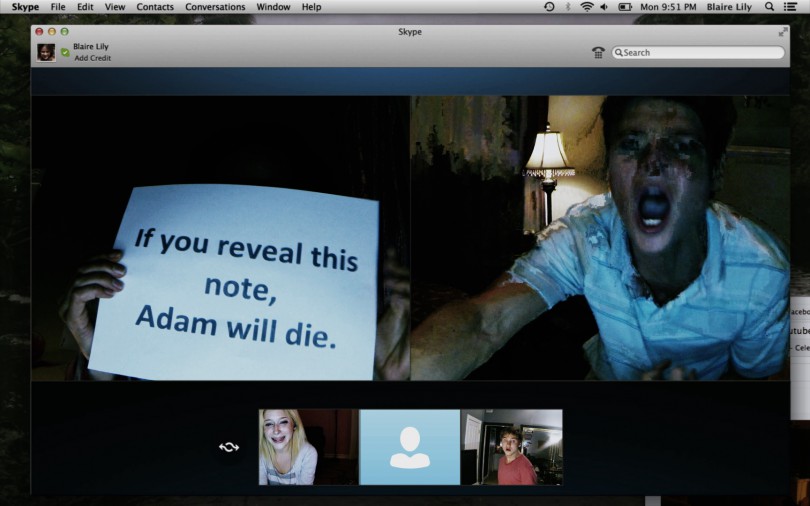
The internet has been the monster in horror movies since before most people reading this had broadband. Long before Zoom séances and cursed apps, there was already something unsettling about a signal you couldn’t see, a website that shouldn’t exist, a voicemail that knew things it shouldn’t. This list covers 24 films spanning three decades of that fear — cursed websites, dark-web stalkers, livestreams gone wrong, and AI that’s learned to want something.
One thing before we start: some of these never leave a computer screen — for that specific flavor, check our list of the best screenlife movies. This list goes wider: any film where the internet itself is the monster, however it’s shot — found footage, screenlife, or shot the old-fashioned way.
Jump to what you’re after:
The Pioneers — Internet Horror Before Social Media
Before creepypastas, before livestreams, before anyone had a smartphone in their pocket — Hollywood was already convinced the internet was going to kill you. These three films are where “internet horror” actually started, for better and for considerably worse. Worth knowing that not all of them are good — one holds a 0% on Rotten Tomatoes — but you can’t talk about this genre honestly without them.
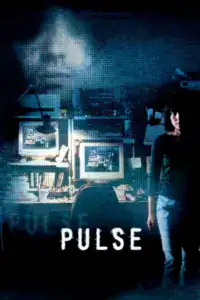
Pulse (2006)
Horror / Sci-Fi
Style: Conventional
A hacker accidentally channels a mysterious wireless signal, and something starts crossing over into the world through it. Ghosts, or something like them, that came in on the frequency.
The hook: A Wes Craven-written American remake of Kiyoshi Kurosawa’s genuinely unsettling Japanese original, watered down into a fairly forgettable teen horror. Worth including for the premise alone — “the internet is haunted” was a genuinely novel idea in 2006, even if this version fumbles it. Skip to the 2001 original if you want it done properly.
Watch it:
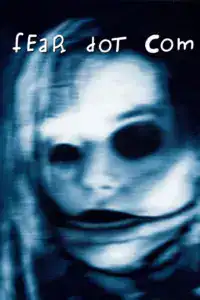
FeardotCom (2002)
Horror / Thriller
Style: Conventional
A detective investigates a string of deaths, all tied to one common thread: every victim visited a website called feardotcom exactly 48 hours before they died.
The hook: A cursed website that kills you 48 hours after your visit — basically The Ring’s videotape, replaced with a URL. Critically savaged on release and it’s easy to see why, but as a time capsule of early-2000s dial-up-era internet anxiety, it’s a genuinely useful piece of the puzzle for how we got to Host and Unfriended twenty years later.
Watch it:
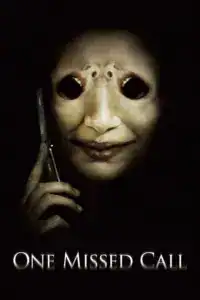
One Missed Call (2008)
Horror / Mystery
Style: Conventional
People start receiving voicemails from their future selves — recordings of their own deaths, complete with the date and time. The calls always come true.
The hook: An American remake of Takashi Miike’s original, and about as poorly regarded as horror remakes get — it holds the rare distinction of a 0% Rotten Tomatoes score. Included here purely for the premise: your own phone, turned into a countdown clock for your death, is a genuinely great piece of tech-horror logic that a much better film could still do something with.
Watch it:
Honorable mention: The Net (1995). Not horror, and barely about “the internet” as we’d recognize it today — but Sandra Bullock’s identity-theft thriller was doing “someone erased my entire digital life” panic a full decade before anyone else thought to. Worth a watch for the historical curiosity alone, even if it doesn’t earn a full spot on this list.
Screen-Only Horror
These are the ones that never leave a screen — the whole film plays out through a laptop, a phone, a video call. This is the purest expression of the format, and if this is specifically the flavor you’re after, we’ve got a full dedicated list: the best screenlife movies. If you are looking for movies like Unfriended, this section is for you.
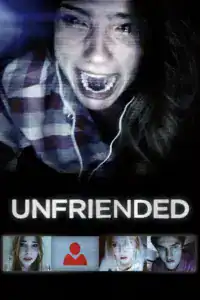
Unfriended (2014)
Horror
Style: Screenlife
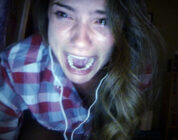
A year to the day after a classmate’s suicide, a Skype call between six friends gets an uninvited guest — an account that shouldn’t exist, revealing the secrets that drove her to it.
The hook: The film that put screenlife on the map. Skype, Facebook, Chatroulette, and a slow-building sense that the technology itself is complicit in the cruelty — cyberbullying turned into an actual haunting. Rough around the edges, but genuinely started something.
Watch it:
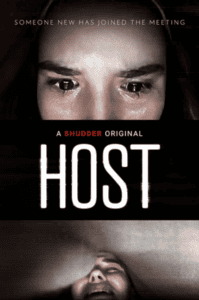
Host (2020)
Horror
Style: Screenlife
Six friends hire a medium to hold a séance over Zoom during lockdown. They invite a spirit in. It accepts.
The hook: Shot entirely over Zoom in twelve weeks during actual lockdown, on a $100,000 budget — and still one of the most purely effective horror films of the decade. 57 minutes, zero filler, and it turned a pandemic-era prank video into a genre landmark.
Watch it:
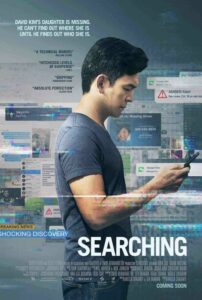
Searching (2018)
Thriller / Mystery
Style: Screenlife
A father’s teenage daughter goes missing. He starts digging through her laptop for clues — and finds a whole daughter he never knew.
The hook: Not technically horror, but essential to this list regardless. John Cho carries an entire film shot through desktop windows and FaceTime calls, and it’s tenser than most straight thrillers manage with a full arsenal of conventional tools.
Watch it:
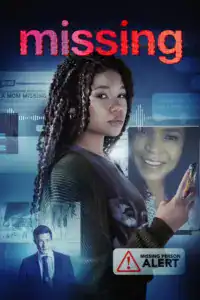
Missing (2023)
Thriller / Mystery
Style: Screenlife
A teenager’s mother vanishes on vacation. Stuck thousands of miles away, she has to find her using nothing but Ring cameras, FaceTime, and whatever she can dig up online.
The hook: The Searching formula, expanded and modernized — more apps, more twists, more digital sleuthing. A spiritual sequel rather than a direct one, and it holds up on its own without needing the original as homework.
Watch it:
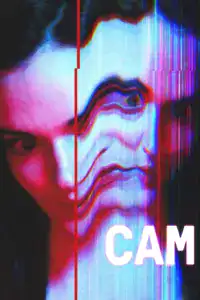
Cam (2018)
Horror / Mystery
Style: Screenlife / Hybrid
An ambitious camgirl wakes up one day to find an exact replica of herself has taken over her channel — and won’t give it back.
The hook: Co-written by a former sex worker, which shows in how seriously it treats its world instead of just gawking at it. Madeline Brewer is genuinely excellent, and the “someone else is wearing my identity” premise is one of the better internet-specific horror ideas anyone’s had.
Watch it:
Livestream & Influencer Horror
The newest wave, and arguably the most self-aware. These films aren’t just set on the internet — they’re specifically about wanting an audience, and what people will do to keep one.
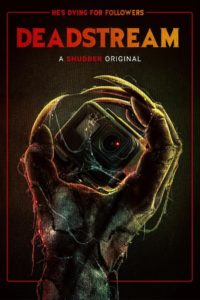
Deadstream (2022)
Horror / Comedy
Style: Found Footage
A disgraced internet personality tries to win his followers back by livestreaming a night alone in a haunted house. The house is, in fact, haunted.
The hook: A genuine crowd-pleaser — chaotic, funny, and unexpectedly gnarly with its practical effects. Understands livestreamer culture well enough to make fun of it without feeling mean-spirited about it.
Watch it:

Milk & Serial (2024)
Horror / Thriller
Style: Found Footage
Two YouTube prank-channel roommates plan a birthday stunt involving a gun and blanks. What happens after is much worse than a bad prank.
The hook: Made for $800, shot by a YouTube sketch comedy duo, and released for free after distributors passed on it — it’s since racked up millions of views. Proof that “prank channel horror” is a real, effective subgenre when the people behind it actually understand the culture they’re satirizing.
Watch it:
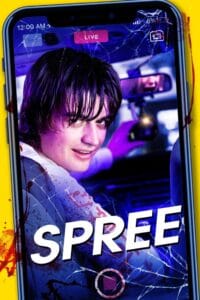
Spree (2020)
Horror / Comedy / Crime
Style: Found Footage / Hybrid
A rideshare driver, desperate for followers, rigs his car with cameras and livestreams himself murdering his passengers — one poisoned bottle of water at a time.
The hook: American Psycho for the algorithm age, with Joe Keery giving a genuinely committed performance as a man who’s mistaken violence for content strategy. Divisive — some find it exhausting rather than sharp — but it’s swinging at something real about engagement-chasing culture.
Watch it:
Honorable mention: Sickhouse (2016). Not a good film by any conventional measure (3.7 on IMDb) — but a genuinely fascinating experiment. The first feature ever shot and released entirely as real, live Snapchat Stories, broadcast to millions of unsuspecting followers who didn’t know they were watching fiction. Historical curiosity more than a recommendation, but worth knowing about.
Dark Web & Digital Stalkers
The internet’s promise of anonymity cuts both ways. This cluster is about what happens when someone on the other side of the screen — a stranger, a hacker, a killer — decides that anonymity works in their favor, not yours.
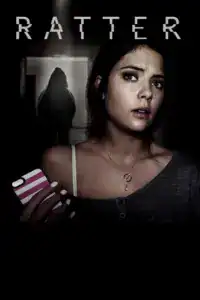
Ratter (2015)
Horror / Thriller
Style: Found Footage / Screenlife
A grad student moves to a new city for a fresh start. Someone has already hacked every camera and microphone in her life, and he’s been watching for a while.
The hook: Told entirely through the stalker’s point of view — her laptop, her phone, her devices — which makes it genuinely uncomfortable rather than just tense. Ashley Benson makes the ordinary parts of the film hit harder, because you know something’s always watching them happen.
Watch it:
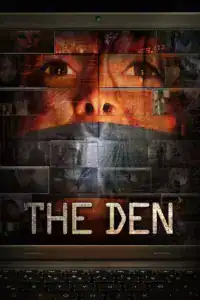
The Den (2013)
Horror / Thriller
Style: Screenlife
A grad student researching webcam chat behavior stumbles into a live-streamed murder. The killers notice her watching — and they don’t stop there.
The hook: The lead actress reportedly researched the role on actual Chatroulette, which tracks — the random-chat sequences feel uncomfortably real. Falls apart a bit once it shifts into straight thriller mode, but the setup is one of the better uses of “the screen becomes the film screen” this genre has produced.
Watch it:
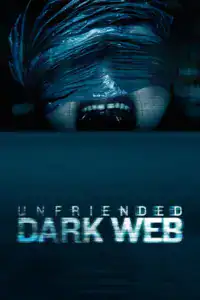
Unfriended: Dark Web (2018)
Horror / Thriller
Style: Screenlife
A guy picks up a “found” laptop and finds a folder of disturbing videos on it. The previous owner wants it back, and he’s not going through customer support to get it.
The hook: Drops the ghost-in-the-Skype-call angle of the original entirely in favor of a grounded, genuinely nasty dark-web conspiracy. A rare horror sequel that’s better regarded than the film it followed.
Watch it:
Untraceable (2008)
Crime / Thriller
Style: Conventional
An FBI cybercrime agent hunts a killer who’s found a way to make his murders go viral — the more people tune in to watch, the faster his victims die.
The hook: A studio thriller that bombed on release but has aged into something genuinely prophetic — its central idea, that public attention directly fuels cruelty, reads very differently in the social media era than it did in 2008. Diane Lane grounds it.
Watch it:
Cursed Media & Internet Folklore
The internet’s real gift to horror wasn’t a new setting — it was a new way of finding stories. A tape someone shouldn’t have posted. A challenge someone shouldn’t have taken. A signal that shouldn’t be broadcasting. This is where creepypasta movies live — the ones built entirely around stumbling onto something that was never meant to be found.

Backrooms (2026)
Horror / Sci-Fi
Style: Hybrid
A struggling furniture store owner finds a strange doorway in a basement. On the other side: an endless, yellowed maze that has no business existing — and something that lives in it.
The hook: The purest bridge between internet folklore and cinema on this whole list — an A24 feature directed by the 20-year-old who created the viral YouTube series it’s based on. The “Backrooms” creepypasta, taken all the way from a Reddit post to a $10 million theatrical release.
Watch it:
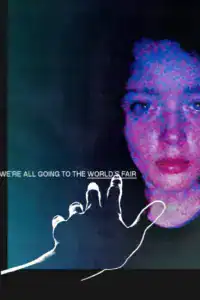
We’re All Going to the World’s Fair (2021)
Horror / Drama
Style: Screenlife / Hybrid
A lonely teenager takes the “World’s Fair Challenge,” an online horror role-play, and starts uploading videos documenting the changes it’s supposedly causing to her.
The hook: Probably the closest anyone’s gotten to actually capturing what it feels like to fall into a creepypasta at 2am. Divisive — some find it a genuine slow-burn masterpiece, others find it more sad than scary — but Anna Cobb’s debut performance is genuinely remarkable either way.
Watch it:
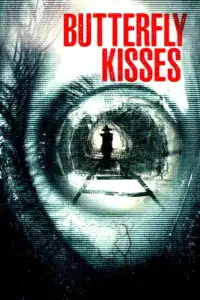
Butterfly Kisses (2018)
Horror / Mystery
Style: Found Footage / Mockumentary
A filmmaker finds a box of tapes labeled “Don’t Watch,” documenting two film students’ obsessive investigation into a local urban legend called the Peeping Tom. He can’t stop watching.
The hook: A self-aware deconstruction of found footage itself — what if Blair Witch or Paranormal Activity’s footage was actually real, and someone found it decades later. That recursive “is this footage real, is the person uploading it lying” quality is exactly the ARG energy this whole category is chasing.
Watch it:
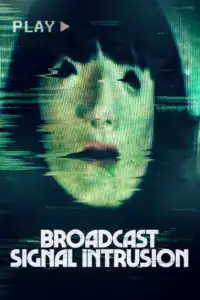
Broadcast Signal Intrusion (2021)
Horror / Mystery / Crime
Style: Conventional
A video archivist digitizing old broadcast tapes stumbles onto a disturbing pirate signal intrusion — a masked figure, garbled audio — and becomes obsessed with tracing it back to his wife’s disappearance.
The hook: Not literally about the internet — it’s rooted in real broadcast signal hijackings from the ’80s, most famously the Max Headroom incident — but it captures the exact feeling of finding a mysterious video online and losing six hours down the rabbit hole trying to figure out where it came from.
Watch it:
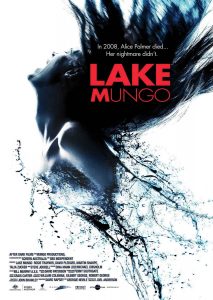
Lake Mungo (2008)
Horror / Mystery / Drama
Style: Mockumentary
After a teenage girl drowns, her grieving family starts noticing something in the photos and home videos taken before her death. It’s her. And it’s watching.
The hook: No jump scares, no gore — just the specific, uncanny horror of spotting something wrong in a photo you’ve looked at a hundred times before. Shot as a straight documentary, and convincing enough that some early viewers genuinely believed it was real. Devastating rather than scary, in the best way.
Watch it:
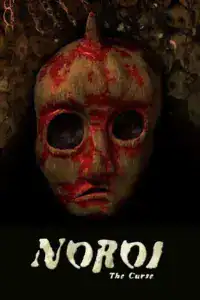
Noroi: The Curse (2005)
Horror / Mystery / Thriller
Style: Found Footage / Mockumentary
A documentary journalist investigates a string of seemingly unrelated deaths, weaving together TV clips, interviews, and recovered footage — until it’s clear they’re all threads of the same ancient curse.
The hook: A pioneer of the pseudo-documentary format, predating the found-footage boom Paranormal Activity kicked off two years later. Nearly two hours long and deliberately patient, but it earns every minute — the closest thing to watching someone actually solve an elaborate internet ARG on film.
Watch it:
AI & Smart Tech Horror
The newest frontier, and the one this whole list has been building toward. It’s no longer just a website or a stranger behind a screen — now the thing watching you is the technology itself. If you are specifically interested in AI, also check out our articles about the best AI movies.
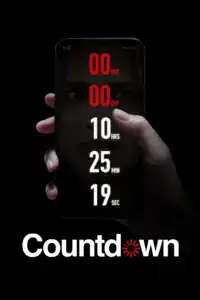
Countdown (2019)
Horror / Supernatural
Style: Conventional
A nurse downloads an app that claims to tell you exactly when you’ll die. Hers says three days. The app has never been wrong yet.
The hook: One reviewer put it perfectly — strip out the phones and the app, and this premise could’ve come straight out of the 90s. It’s a straightforward, well-staged supernatural slasher with a modern gimmick bolted on, and it’s all the more fun for not overthinking it. Not scary in any lasting way, but a genuinely good time.
Watch it:
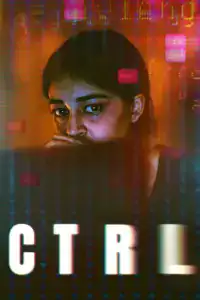
CTRL (2024)
Thriller / Drama
Style: Screenlife
An influencer catches her boyfriend cheating on a livestream. Wanting him erased entirely, she hands the job to an AI app — which turns out to have plans of its own for her digital life.
The hook: An Indian screenlife thriller, shot 80% on a phone, that plays like a genuinely current update to Black Mirror’s whole thesis — you don’t get erased from the internet, the internet decides what to do with you instead. Ananya Panday is convincingly unraveling throughout.
Watch it:

Kimi (2022)
Thriller / Crime / Mystery
Style: Conventional
An agoraphobic tech worker reviewing smart-speaker recordings for a company that makes an Alexa-style assistant stumbles onto evidence of a violent crime — and has to leave her apartment for the first time in years to do anything about it.
The hook: A Soderbergh thriller more than horror, but it belongs here for what it’s actually about — the always-listening smart speaker in your home, and the company quietly deciding what to do with what it hears. Made during real COVID lockdown conditions, and it shows in the best way. Zoë Kravitz is excellent.
Watch it:
Where This Goes Next
Twenty-four films, three decades, and one throughline: the internet has never actually needed a ghost to be frightening. Pulse and FeardotCom bolted a haunting onto a dial-up modem because that’s the horror vocabulary Hollywood had in 2002. Twenty years later, Kimi and CTRL don’t need a haunting at all — the horror is just what the technology is already doing, quietly, in the background, with your permission buried somewhere in the terms of service.
That’s the real arc across this list. Early internet horror treated the web as a place something evil could get in through — a website, a signal, a chat room. The more recent films treat the technology itself as the thing that was never fully on your side to begin with. Cam doesn’t need a demon; the demon is not owning your own image anymore. CTRL doesn’t need a ghost; the ghost is an app you gave permission to delete your ex.
Backrooms sits at the exact center of that shift — a film that didn’t just borrow the internet’s aesthetic the way Pulse or FeardotCom did, but was literally born on the internet first, as a piece of collaborative folklore, before it ever became a script. That’s probably where this genre goes next: not stories about the internet, but stories that came from it directly, the same way Kane Parsons’ YouTube channel became an A24 release with a $10 million budget.
If any part of this list stuck with you more than the rest — the pure screen-only dread, the livestream chaos, the dark-web paranoia, the cursed folklore, or the sense that your own devices might not be entirely on your side — there’s a whole cluster above built around exactly that feeling. Start wherever pulled you in.