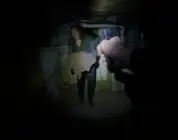
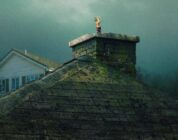
I have a theory about liminal horror. The reason it works — the reason a photograph of an empty corridor can make your skin crawl in a way that a masked killer simply can’t — is that it doesn’t invent a threat. It reveals one that was already there. The wrongness of a space you can’t escape. The particular dread of a place that looks almost right but isn’t. The fluorescent hum. The yellow wallpaper. The corridor that goes on longer than it should.
Backrooms understood that instinct completely. And when the credits rolled, I found myself doing something I rarely do after a horror film: sitting in the dark for a few extra minutes, not quite ready to re-enter a world that had, temporarily, started to feel slightly suspicious.
If you felt the same thing, this list is for you.
But here’s the problem: there is no film quite like Backrooms. It has no direct predecessor — no obvious template, no genre it belongs to completely. Instead it sits at the crossroads of several different fears, pulling from found footage, liminal horror, institutional dread, and psychological unravelling all at once.
That’s why this list is structured differently. We’ve split the picks into three categories — Wrong Space, Wrong Reality, and Wrong Format — because the films that share Backrooms‘ DNA don’t all get there the same way. Some trap you architecturally. Some quietly rewrite the rules of the world around you. Some use the camera itself as the instrument of dread.
None of them are Backrooms. But each one shares something essential with it.
Quick overview of the movies in this article
| Film | Year | Type of Wrongness | Format | Accessibility | Closest to Backrooms |
|---|---|---|---|---|---|
| Kane Pixels: The Backrooms | 2022 | Wrong Format | Found Footage / YouTube | ●●●●● | The origin — essential viewing |
| The Rolling Giant | 2023 | Wrong Format | Found Footage / YouTube | ●●●●○ | Same director same dread |
| Vivarium | 2019 | Wrong Space | Conventional | ●●●●○ | Domestic trap with no exit |
| Cube | 1997 | Wrong Space | Conventional | ●●●●○ | Architectural horror at its purest |
| The Shining | 1980 | Wrong Space | Conventional | ●●●●● | The Overlook as impossible space |
| Annihilation | 2018 | Wrong Reality | Conventional | ●●●●○ | A zone where rules no longer apply |
| It Ends | 2023 | Wrong Reality | Conventional | ●●●○○ | A world that remembers things wrong |
| Beyond the Black Rainbow | 2010 | Wrong Reality | Conventional | ●●○○○ | Institutional liminal dread |
| Under the Skin | 2013 | Wrong Reality | Hybrid | ●●●○○ | Liminal space as embodied horror |
| Skinamarink | 2022 | Wrong Format | Found Footage | ●○○○○ | Liminal horror at its most extreme |
| Exit 8 | 2024 | Wrong Format | Conventional / Game Logic | ●●●●○ | The purest loop experience |
But before we take a look at all those movies, let’s start with the beginning.
Ground Zero — The YouTube Series That Made Backrooms Possible
Before Backrooms was an A24 film with Chiwetel Ejiofor and an $81 million opening weekend, it was a nine-minute YouTube video made by a 16-year-old in his bedroom using Blender. That video — Kane Pixels: The Backrooms (2022) — is the reason the film exists, the reason liminal horror is a mainstream conversation, and the reason you’re reading this list.
If you haven’t watched the original series, stop here. Watch it first. It’s free, it takes less than two hours to get through the core episodes, and it will make the film — and everything on this list — land considerably harder.
Kane Pixels: The Backrooms (2022) — YouTube
A grainy found footage video of a person who accidentally “no-clips” out of reality and finds themselves in an endless maze of yellow corridors and fluorescent hum. No explanation. No exits. Something in the dark that you can hear before you can see.
Why it’s essential: This is the source material — not just for the film, but for an entire aesthetic that has reshaped internet horror. Kane Parsons built the Backrooms mythology from this single video, developing it across more than 20 shorts before A24 came calling. The film is in direct continuity with the series. Watching the series first isn’t just recommended — it’s the difference between seeing a film and understanding a world.
What sets it apart: No budget, no cast, no studio. Just a teenager, a 3D software package, and an instinct for sustained dread that most professional horror directors never develop. Several episodes are more frightening than anything in the feature film.
Wrong Space: Films Where the Location Is the Monster
These are the films that understand what Backrooms understands: that the most frightening thing in a horror film isn’t always what’s inside the room. Sometimes it’s the room itself. A space with no logical exit, no rational architecture, and no interest in the people trapped inside it. The location as antagonist. The building as the monster.
Vivarium (2019)

A young couple visits a show home in a new suburban development and cannot leave. Every road leads back to the same house. Food is delivered. A baby appears. The world outside is green, pastel, and perfectly identical in every direction.
Why it’s similar to Backrooms: The trap here works exactly like the Backrooms — a space that looks almost normal, replicates itself endlessly, and has no visible exit. Lorcan Finnegan built the exterior on a physical set in Belgium: rows of identical pastel facades stretching to the horizon. The wrongness is in the geometry, not the gore.
What sets it apart: Where Backrooms is about a man who begins to prefer the nightmare, Vivarium is about two people who chose the trap — they walked into the show home voluntarily — and now the walls have closed. The horror here is domestic and slow-burning rather than spatial and suffocating. Jesse Eisenberg and Imogen Poots are excellent.
Cube (1997)
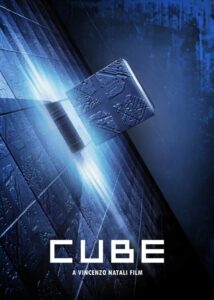
Six strangers wake up inside a vast network of cubic rooms. Some rooms are safe. Some contain lethal traps. There are no explanations, no exits, and no obvious logic to which rooms are which.
Why it’s similar to Backrooms: This is Backrooms distilled to its purest structural form — an impossible space, no way out, and the gradual realisation that the architecture itself is the antagonist. The Cube has no purpose anyone can identify. It simply exists, and it kills.
What sets it apart: Where Backrooms keeps its horror atmospheric and psychological, Cube is ruthlessly mechanical. The deaths are sudden, the mathematics are real, and the film’s interest is as much in what the characters do to each other under pressure as what the space does to them. Lean, brutal, and surprisingly philosophical for a Canadian genre film made for $350,000.
The Shining (1980)
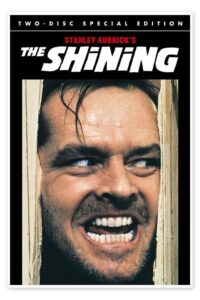
A writer takes a winter caretaker job at the Overlook Hotel with his wife and young son. The hotel is isolated, vast, and empty. It does not stay empty.
Why it’s similar to Backrooms: Kubrick’s Overlook is the most famous impossible space in cinema history — a hotel that is geometrically inconsistent, architecturally wrong, and somehow larger on the inside than any building has a right to be. The Overlook doesn’t just contain evil. It generates it. The space is the source.
What sets it apart: The Shining has characters worth caring about, a psychological depth, and a central performance from Jack Nicholson that Backrooms never attempts. It’s also the most mainstream film on this list — if you haven’t seen it, that’s the real emergency here.
Wrong Reality: Films Where the Rules Have Changed
These are films where the horror isn’t spatial but ontological — the world around the characters is operating according to rules they were never told. Physics behaves differently. Time moves wrong. The familiar becomes alien without warning and without explanation. You don’t need to be trapped in a room to feel trapped. Sometimes the entire world is the room.
Annihilation (2018)
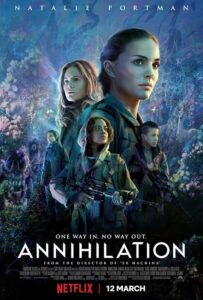
A biologist joins a secret expedition into a mysterious quarantined zone known as the Shimmer — an area where the laws of nature appear to have been quietly rewritten. Animals mutate. Plants grow in human shapes. The expedition members begin to change.
Why it’s similar to Backrooms: The Shimmer is a liminal space in the purest sense — a zone between the world as it is and the world as something else has decided it should be. Alex Garland never explains what the Shimmer is or where it came from, and the film is considerably stronger for that restraint. The dread here, as in Backrooms, comes from the gap between the familiar and the wrong.
What sets it apart: Annihilation is the most visually beautiful film on this list. Where Backrooms is fluorescent and yellow and suffocating, Annihilation is lush, overgrown, and strangely seductive. The horror doesn’t repel you. It pulls you in. Natalie Portman is extraordinary.
It Ends (2023)
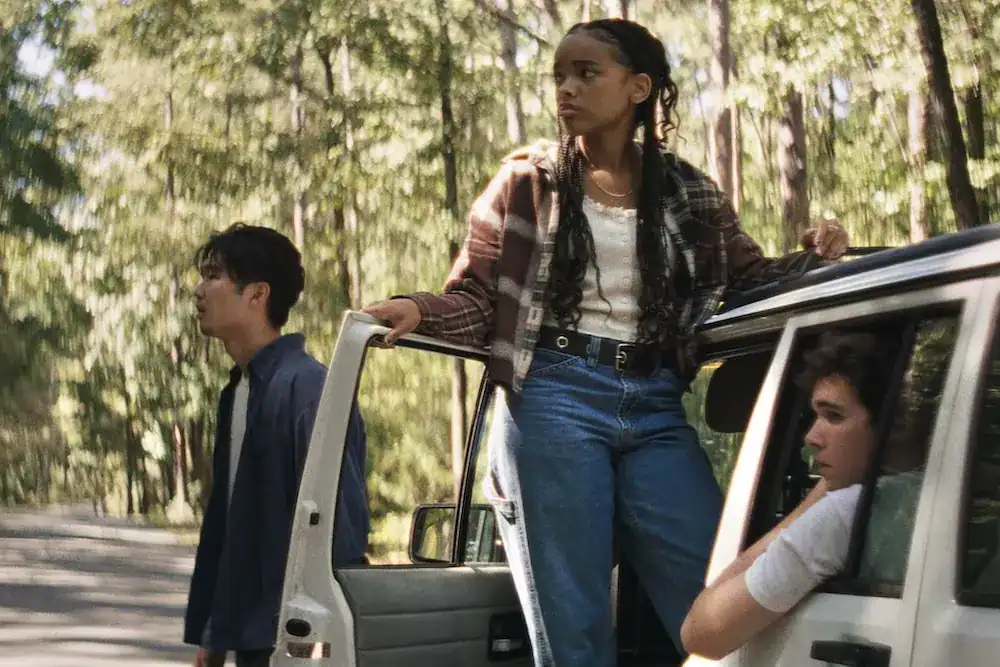
A woman returns to her hometown in Ireland after years abroad and finds that something has changed — in the landscape, in the people, and in herself. The world she grew up in no longer operates the way she remembers.
Why it’s similar to Backrooms: Kane Parsons himself cited It Ends as an influence — which tells you everything you need to know about its relevance here. The film shares Backrooms‘ interest in a world that remembers things slightly wrong, and its slow, patient approach to dread. Nothing announces itself as supernatural. Everything simply feels off.
What sets it apart: It Ends is the most grounded and emotionally rooted film in this section — it’s as much about grief and displacement as it is about horror. The wrongness here is personal as much as spatial. Slower than Backrooms, quieter, and ultimately more devastating.
Beyond the Black Rainbow (2010)
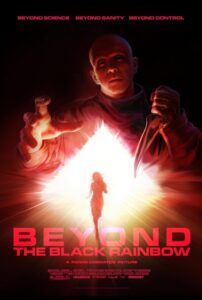
Set in 1983, in a mysterious research facility called Arboria. A young woman is held captive by a doctor who may or may not be losing his mind. The facility operates according to its own internal logic. The outside world barely exists.
Why it’s similar to Backrooms: Arboria is a liminal space in institutional form — a building designed to contain something, with rules that only its architect understands. The film shares Backrooms‘ corporate horror aesthetic, its fluorescent dread, and its refusal to explain itself in conventional narrative terms.
What sets it apart: Beyond the Black Rainbow is the most formally demanding film on this list — slow, hypnotic, and deliberately alienating. It is less a story than an experience. Director Panos Cosmatos described it as “a film that plays like a memory of a movie you’ve never seen.” I find that an accurate description. Not for everyone. Absolutely for some people.
Under the Skin (2013)
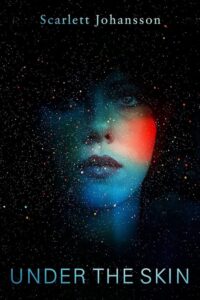
An unnamed woman drives through Scotland in a van, picking up men. What she is and what she wants becomes gradually, horribly clear.
Why it’s similar to Backrooms: The spaces Scarlett Johansson lures her victims into are among the most genuinely liminal in cinema — featureless black voids where the rules of physics no longer apply, where depth is impossible to judge, where the familiar becomes something ancient and predatory. Jonathan Glazer shot several scenes with hidden cameras and non-actors, creating an authenticity that makes the surreal sequences hit harder by contrast.
What sets it apart: Under the Skin is the only film on this list where the liminal space is a person as much as a place. The wrongness here is embodied rather than architectural. One of the most unsettling films of the last decade — and one of the most underseen.
Wrong Format: Films Where the Camera Is the Threat
I have a soft spot for this category. Found footage and analog horror are the formats I return to most — and the ones that, when they work, produce a specific kind of dread that no conventional film can replicate. The camera doesn’t just record what’s happening. It implicates you in it. You’re not watching someone’s nightmare. You’re watching their evidence.
Backrooms understands this. So do these four films.
The Rolling Giant (2023) — YouTube
A teenage vlogger discovers a mysterious staircase in an empty field leading underground to a supernatural recreation of a demolished Dallas mall. Something massive is down there with him. It rolls.
Why it’s similar to Backrooms: This is Kane Parsons’ other masterwork — made between the Backrooms series and the feature film, and arguably his most accomplished work to date. The same analog horror aesthetic, the same found footage grammar, the same sustained dread of a space that shouldn’t exist. The underground mall is one of the most effective liminal environments Parsons has ever created. And the Rolling Giant itself — a massive cardboard puppet on wheels — is one of analog horror’s great antagonists.
What sets it apart: Where the Backrooms series is corporate and conspiratorial, The Rolling Giant is melancholic. The mall it recreates was real — Valley View Center in Dallas, demolished in May 2023. The horror here carries genuine grief for a place that no longer exists. I find that emotional dimension gives it a weight that most found footage films never reach. Watch it in one sitting, in the dark, with headphones.
Skinamarink (2022)

Two children wake up in the middle of the night. Their father is gone. The doors and windows have disappeared. Something is in the house with them, speaking to them from the dark.
Why it’s similar to Backrooms: Skinamarink is liminal horror taken to its absolute logical extreme — a film constructed almost entirely from shots of ceilings, floors, and corners, with dialogue barely audible and narrative almost entirely absent. The house in this film operates exactly like the Backrooms: a domestic space that has become something else entirely, with its own rules and its own agenda.
What sets it apart: This is the most divisive film on this list by some distance. Kyle Edward Ball made it for $15,000 and it went viral on TikTok before receiving a theatrical release. Half of its audience found it unwatchable. The other half consider it a genuine horror landmark. I find myself in the second camp — but I’d recommend watching a trailer first to calibrate your tolerance for its particular brand of deliberate, suffocating slowness.
Exit 8 (2024)
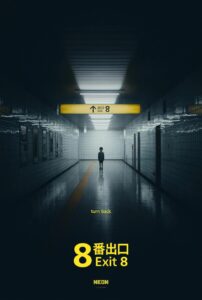
A man is walking through an underground passage — the kind you find beneath any large Japanese train station. He needs to reach Exit 8. The passage loops. Something is wrong with the other people in the corridor. Some of them are not quite right.
Why it’s similar to Backrooms: Exit 8 is the most purely liminal film on this list — an underground passage, a looping space, and the specific dread of a public non-place that has stopped behaving like one. It is, in essence, a feature-length version of the original Backrooms creepypasta: you’ve ended up somewhere familiar that has quietly become something else. I watched it at midnight and spent the next morning slightly uneasy in every corridor I walked through.
What sets it apart: Where most liminal horror films build slowly, Exit 8 is compact and precise — more puzzle than atmosphere, more game logic than conventional narrative. It shares DNA with the video game format as much as cinema. If you’ve ever played a horror game and felt the specific dread of a looping level, Exit 8 will feel immediately familiar.
Which One to Watch First?
Not every film on this list delivers the same kind of dread. Here’s where to start depending on what Backrooms did to you.
If the architecture got under your skin → Vivarium. The most accessible entry point on this list — a recognisable world made quietly, completely wrong. Watch it the same night.
If you want the purest found footage experience → The Rolling Giant. Free on YouTube, 50 minutes, and in some ways more frightening than the feature film it helped inspire. Essential.
If you want something mainstream and undeniable → The Shining. If you haven’t seen it, that’s the real emergency. If you have, watch it again with the Backrooms fresh in your mind. Kubrick’s Overlook hits differently now.
If you want the most formally challenging experience → Skinamarink. No hand-holding, no conventional narrative, no exits. The film that goes furthest in the direction Backrooms points toward.
If you want something beautiful as well as frightening → Annihilation. The only film on this list that makes you want to walk into the horror rather than run from it.
If you want something completely unlike anything else → Beyond the Black Rainbow or Under the Skin. Both are singular, both are demanding, and both will stay with you considerably longer than their runtimes suggest.
If you want the most disorienting loop experience → Exit 8. Compact, precise, and the film most likely to make you feel slightly wrong in everyday corridors afterwards.
If you want to go deepest into the Backrooms mythology → Start with the Kane Pixels YouTube series, work through The Rolling Giant, then watch the film again. By the third viewing, the Easter eggs and connections start to reveal themselves.
Read Our Full Backrooms Review
If this list brought you here before you’ve seen the film — go watch it first. Our full spoiler-free review of Backrooms (2026) is waiting for you when you get back, along with a complete breakdown of the ending, the Async mythology, and everything the film doesn’t quite explain.