27.5 million people watched The Last House in its first three days on Netflix. A lot of them finished it with questions. This page answers them — including the ones the film itself isn’t entirely sure about.
⚠️ Full spoilers below: If you haven’t watched the movie yet, don’t read any further and go watch it first!
What is The Last House about?
Check out our full review of the Last House for everything there is to know about the movie.
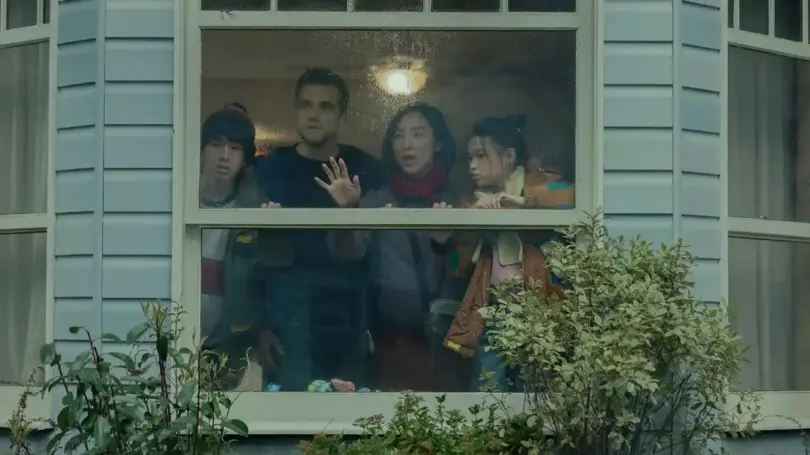
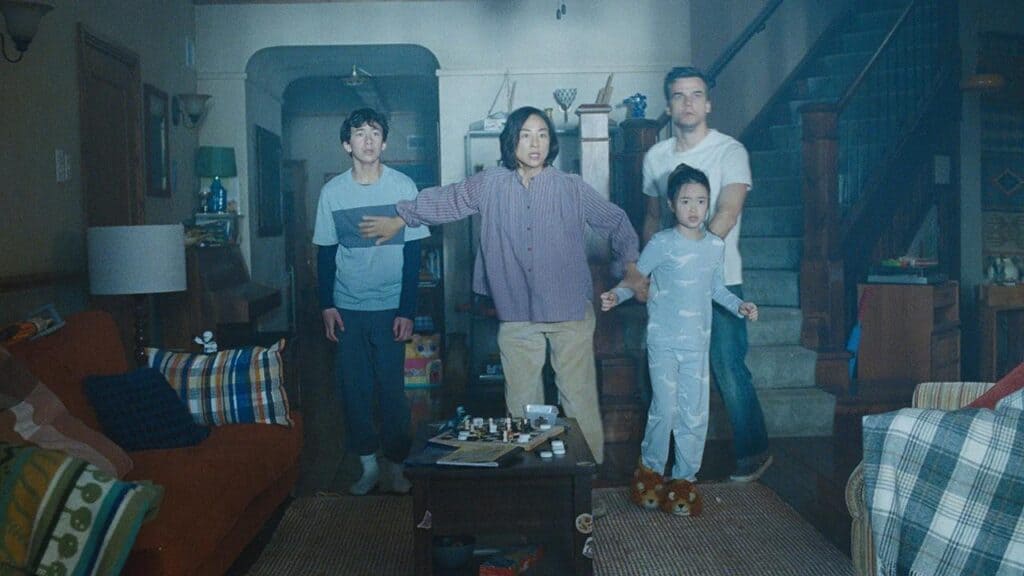
The Delgado family — engineer father Jason (Wagner Moura), mother Ann (Greta Lee), teenage son Graham and younger daughter Ruth — wake up one November morning in their Seattle home to find every door and window sealed shut from outside. Glass can’t be broken. The seal is made of rainwater, manipulated by something they can’t see. Their neighbours are in the same situation. Nobody comes to help.
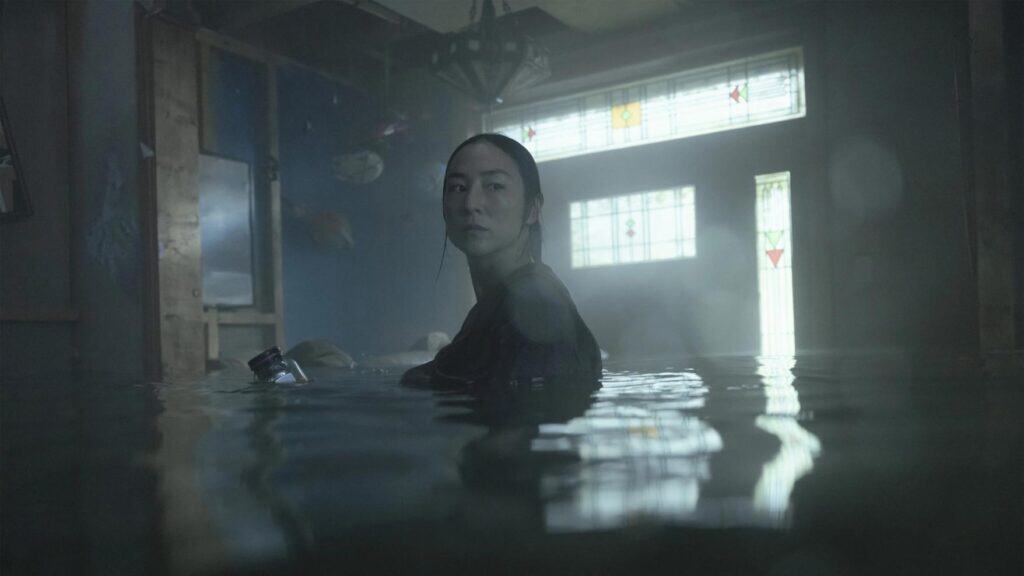
What follows is five years of survival inside the house — trapping animals through a loose chimney cap, growing vegetables in the soil beneath the floorboards, watching their children grow up inside four walls. The film is partly a domestic drama about what prolonged confinement does to a family, and partly a creature feature about what’s waiting outside in the rain. It’s better at the first half than the second.
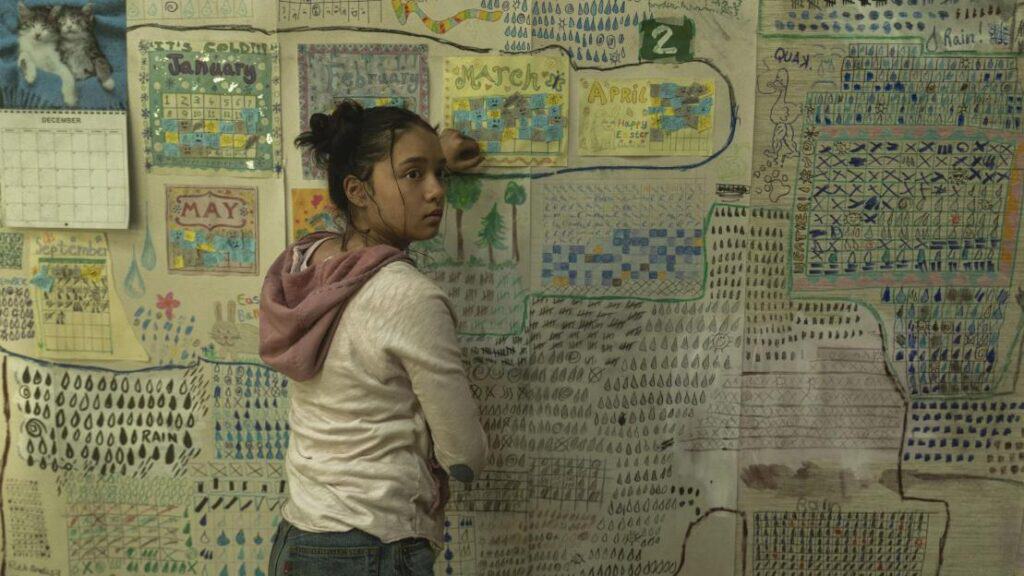
Directed by Louis Leterrier (Now You See Me, Fast X) from a screenplay by Matthew Robinson, The Last House was shot partly on 35mm film with an emphasis on practical effects — Leterrier wanted the house to feel real, lived-in, textured. It mostly succeeds at that. The film was released on Netflix on August 7, 2026, and became the platform’s most-watched title that week.
What are the creatures?Are they aliens?
That’s Ruth’s theory, and she’s right. The creatures are not aliens — they’re ancient ocean dwellers that have lived in the deepest ocean trenches for longer than humans have existed on Earth. Hidden from us, they evolved in the dark — developing intelligence, the ability to control water, and capabilities we have no framework to understand. We just never knew they were there.
They are bipedal, tentacled, roughly the height of a professional basketball player. Their bodies drip a fluid that freezes anything it touches (we explain that below). They can control water. They make clicking noises and low growls. The design — somewhere between a Cthulhu figure and a deep-sea creature — was built as a practical silicone suit before VFX were added on top.
Director Louis Leterrier is clear about what they represent: “They’ve been there way before us. We are living on their planet.”
Why did the creatures emerge?
As for why the creatures emerged when they did — climate change, human pollution, microplastics, rising ocean temperatures. Eventually the deep sea became uninhabitable and they had nowhere left to go. They didn’t invade our world. They were pushed out of their own. As Leterrier puts it: “We think it’s an invasion movie, but we realise that we’re the aliens.”
What is the rain?
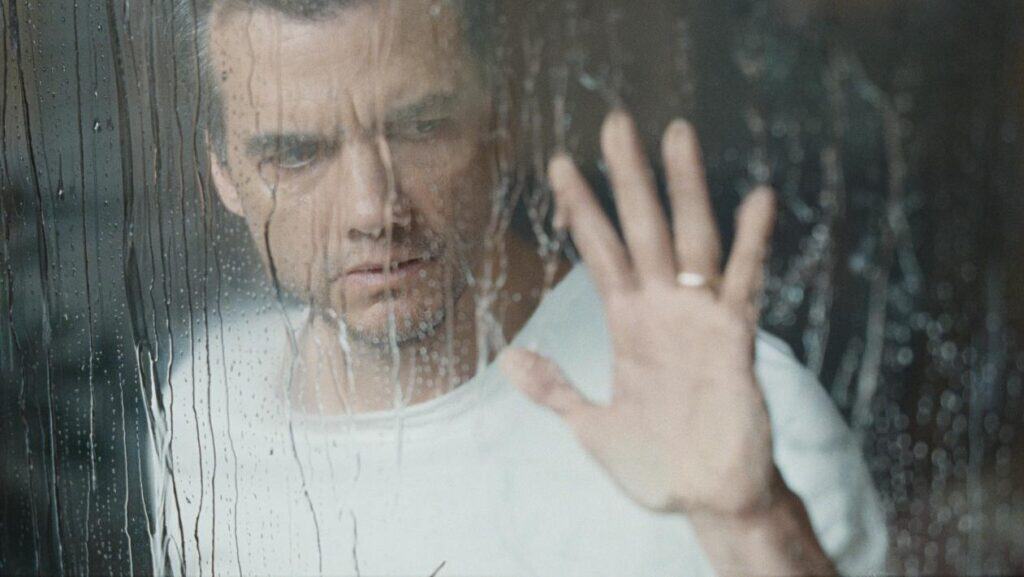
The creatures control water. All of it — the ocean, the currents, and by extension the weather above it. The rain is not a coincidence. It’s them.
They use it to seal every door and window from the outside — not with locks or barriers, but with water held in place by something that understands what it’s doing. The seal is liquid, directed, deliberate. Throughout the film the family notices that the rain behaves wrongly. It shifts direction. It gathers in patterns. It reacts to movement. This isn’t a storm — it’s a presence.
The rain also works as a slow weapon. The saltwater the creatures carry contaminates the family’s drinking water and kills their plants. Ruth figures it out by tasting a droplet that has seeped inside. They aren’t just sealed in. They’re being starved out.
Ending explained: What does the ending mean?
Okay, so here is my opinion on it:
But the creatures didn’t come to exterminate us. They came to take back a planet we made unlivable for them. The flooding, the sealed homes, the five years of slow starvation — none of it was cruelty. It was eviction. And the Delgados survive not because they were stronger or smarter than anyone else, but because Jason made one choice that proved humans might be worth tolerating: he let something go when he could have killed it.
That’s what the Day 1 counter means. Not that the nightmare is over — Seattle is underwater, the world as it was is gone for good — but that something new is possible. A world where humans and these creatures coexist, on the creatures’ terms, in a planet they have reclaimed. Whether humanity deserves that chance is a question the film asks and doesn’t answer.
The “Hello?” on the radio is the film’s last word on hope. Someone else is out there. Whether they made the same choice the Delgados did, whether the creatures spared them too — we don’t know. The screen goes black and leaves it with you.
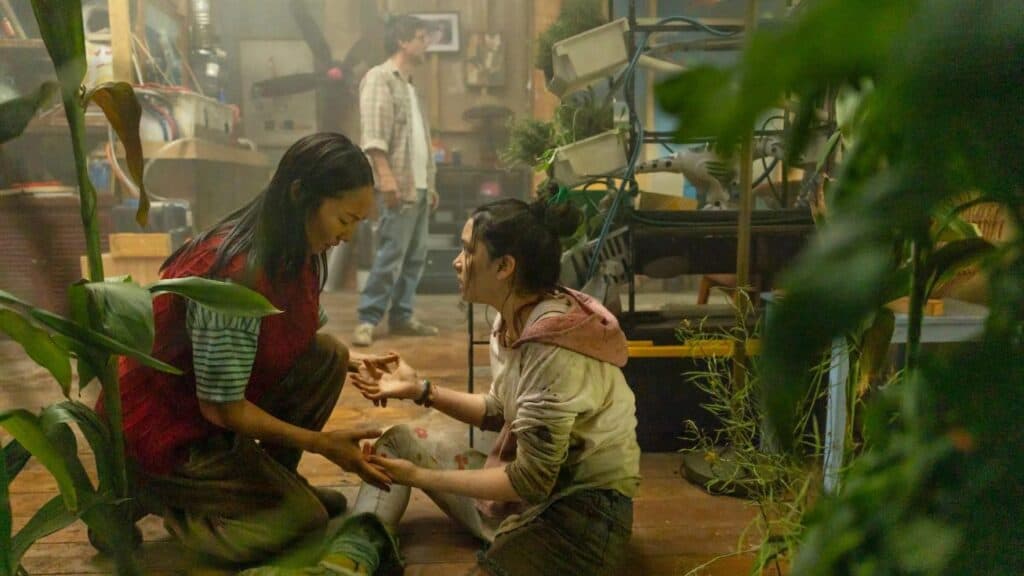
There’s also a more personal reading that has nothing to do with the mythology. While watching the film, I couldn’t help thinking about COVID — a family sealed inside their home, supplies running low, no information, no clear end in sight, children growing up without the outside world. Leterrier has acknowledged it as a conscious influence. It doesn’t explain the creatures or the ending, but it explains why the film feels so visceral to anyone who lived through 2020. The horror isn’t just what’s outside. It’s the specific claustrophobia of being trapped with the people you love and slowly running out of everything.
More Questions About The Last House
Why do all the creatures leave after one act of mercy?
It’s a giant leap — and the film knows it. One creature vouching for four people after five years of planetary occupation is a lot to swallow, and most viewers feel the stretch.
The intended reading is that the creatures are sentient beings capable of recognising coexistence. Jason’s decision to spare the creature demonstrated that at least some humans are capable of restraint rather than domination, and the creature communicated that to the others. It’s less “one act of kindness saves the world” and more “proof of concept.”
The honest reading is that it’s a screenplay convenience. The creatures don’t leave globally — Seattle is still underwater, the world has still fundamentally changed. They spare this one family. Screenwriter Matthew Robinson prefers to leave it open to interpretation, which is often what writers say when the logic doesn’t fully hold up. It’s the film’s weakest moment, and most viewers feel it.
Why does the fluid freeze everything it touches?
The film never explains it directly, but the biology makes sense. The creatures are adapted to hadal-zone conditions — pressures exceeding 1,100 atmospheres, temperatures hovering just above freezing. The fluid dripping from their bodies is essentially deep-ocean water carrying those extreme properties to the surface. When it contacts anything at normal temperature, the thermal differential is so extreme it freezes on contact. It’s not a weapon — it’s a byproduct of their biology. They can’t help it any more than we can help being warm.
Is the creature Cthulhu?
No — but the resemblance isn’t an accident. Director Louis Leterrier has said the design sits somewhere between a Cthulhu figure and a real deep-sea creature, built as a practical silicone suit before VFX were layered on top. The mythology is entirely original to the film; Lovecraft’s Cthulhu isn’t a direct reference, just a visual touchstone.
Who says “Hello?” on the radio?
The film doesn’t tell us, and that’s deliberate. It could be another surviving family. It could be an organised group of survivors. It could be a recording on a loop. Director Leterrier and screenwriter Robinson have both declined to specify, preferring the ambiguity of the moment — the point isn’t who it is, but that someone is out there. The day counter resetting to Day 1 immediately before it suggests the film wants you to read it as hope rather than threat. Whether you do is up to you.
Will there be a sequel?
As of August 2026, Netflix has not confirmed a sequel. The ending leaves the door open — literally and narratively — and the film’s viewership numbers (27.5 million in three days) make a follow-up commercially attractive. But nothing has been announced. If one comes, it would presumably follow the Delgados sailing into a flooded world trying to find other survivors, which is a genuinely interesting premise for a second film.
How does the family survive for 5 years?
Ingenuity, mostly Jason’s. When the chimney cap loosens, it creates a small opening in the otherwise impenetrable seal — not large enough to escape through, but enough to fish through. Jason builds traps and catches animals — squirrels, foxes — for meat. Ann removes sections of the flooring to plant vegetables directly in the soil underneath the house, irrigated through a network of improvised pipes. They call it “chimney fishing” on set. It’s one of the more satisfying details in the film — a practical, believable solution to an impossible problem.
Here is a full breakdown of the timeline:
Who is the narrator?
Adult Ruth, voiced by Arden Cho. The film reveals this late — Ruth narrates the story in retrospect, which means she survived into adulthood and has had time to process and make sense of what happened. It reframes everything that came before as a memory rather than a present-tense experience, and gives the ending a layer of retrospective calm that the events themselves don’t quite earn. Cho is credited as Adult Ruth, making her the third actress to play the character across the film’s timeline.
Why does Jason spare the creature?
Two reasons that work together. The first is Ruth — she has shown throughout the film a tendency toward empathy for trapped or suffering things, including the ferret that bit her. When she pleads with Jason not to kill the creature, he listens in a way he might not have five years earlier. The second is that Jason is a fisherman. The film draws a quiet parallel between the creature tangled in his trap and every fish he has ever caught and released. He knows what mercy looks like in that context. He just had to be reminded it applied here too.
Is The Last House based on a book or true story?
No. It’s an original screenplay by Matthew Robinson, who also wrote Good Luck, Have Fun, Don’t Die. The film was developed under the working title 11817 and announced in May 2024. Robinson has cited pandemic lockdowns as a conscious influence on the premise — the specific anxiety of being sealed inside a home with your family while something dangerous exists outside is something most of the film’s audience has now lived a version of. The creatures and the environmental allegory are entirely fictional, though the science of deep-sea biology the film gestures toward is real.
Did you see The Last House? What’s your take on the ending — and the creatures? Drop a comment below.
Or are you looking for what to watch next? We’ve put together a list of 11 movies like The Last House — from Bird Box to Brick.