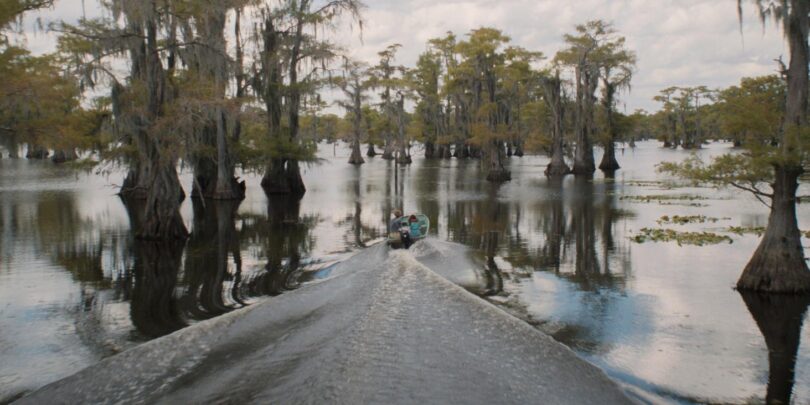
Directed by Celine Held and Logan George and produced by M. Night Shyamalan, Caddo Lake is a carefully constructed time-travel puzzle involving multiple timelines, a complicated family tree, and a closed loop that can be genuinely confusing on first viewing.
This explanation breaks down the complete Caddo Lake timeline, family tree, time-travel mechanics, and ending — and shows how they all fit together.
⚠️ This article contains full spoilers. Everything. The twists, the family connections, the ending. If you haven’t watched yet, stop here — and watch it. It’s worth going in blind.
The Rules of the Lake — How the Portal Works
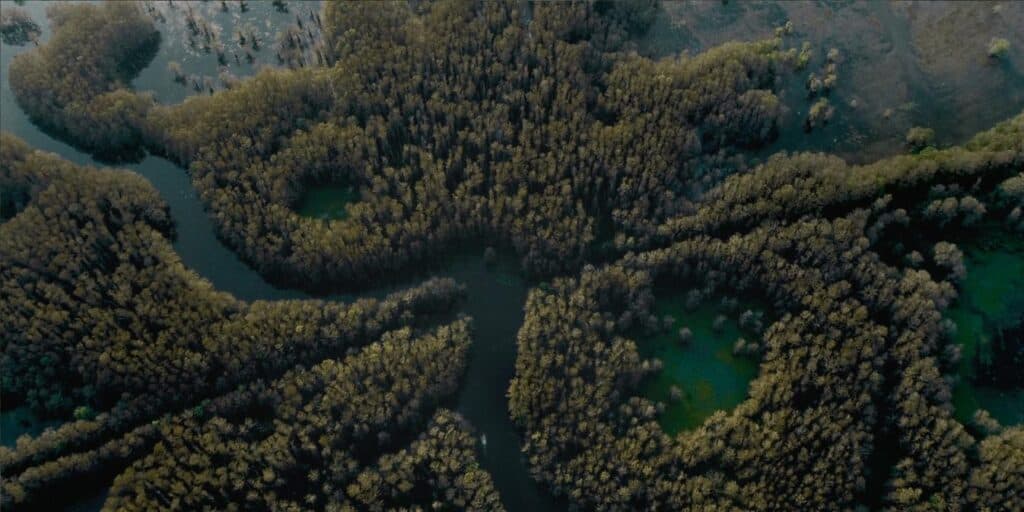
Before anything else makes sense, the mechanics need to be clear. Caddo Lake is a time travel film, but it doesn’t announce itself as one. It earns that revelation slowly — which means the rules governing the time travel only become explicit well into the second act.
Here is what the film establishes:
The location. A specific stretch of Caddo Lake called Found Herd Creek functions as a natural time portal. It is not a machine, not a supernatural artefact, not something anyone built. It is simply a place where the fabric of time is thin.
The trigger. The portal only activates during droughts, when water levels drop low enough to expose Found Herd Creek as dry land. When the water returns — whether through rain or, in the film’s climax, through a dam release — the portal closes. This is not arbitrary. It is the mechanism the film uses to create its ticking clock.
The destination. Crossing the portal does not send you to a predictable time. Characters cross and arrive in different eras seemingly at random — or rather, at the lake’s own logic, which the film never fully explains and is wise not to. The point is not the science. The point is the consequence.
The loop. What makes Caddo Lake more than a standard time travel puzzle is that the crossings are not isolated events — they form a closed loop. Each character who crosses the portal does so in a way that was always going to happen, had to happen, for the present to exist at all. Anna had to disappear into 1952 for Paris to be born. Paris had to cross into 1952 to save her. The loop has no beginning and no end. It simply is.
I find this the film’s most quietly devastating idea: that the losses these characters have carried — a missing girl, an absent father, a man who never came home — were never accidents or abandonments. They were inevitable. Written into the structure of the lake itself.
In short:
- The portal is natural — not supernatural, not man-made
- It only opens during drought, when Found Herd Creek is exposed as dry land
- Destination is unpredictable — the lake decides where you end up
- The loop is closed and self-consistent — everything that happens already happened, and could not have been otherwise
The Three Timelines
Caddo Lake unfolds across three distinct eras, often cutting between them without announcement. The film trusts you to keep up — and rewards you when you do. Here is each timeline laid out clearly.
1952
This is the earliest era we see, and in narrative terms it is where everything ends up. Anna arrives here as a lost, injured eight-year-old. She is taken in by a local couple, grows up on the lake, takes the surname Lang, marries a man named Benjamin Lang, and eventually gives birth to a son.
That son is Paris.
The 1952 timeline is the one the film reveals last, and it reframes everything that came before it. By the time we understand what happened to Anna here, the story has already told us who she becomes — and the weight of that knowledge lands differently on a second viewing.
2003
This is Paris’s timeline — his origin, his present, his point of departure. He works dredging Caddo Lake and is quietly unravelling in the aftermath of his mother’s death. She drowned during a seizure while driving across a bridge with Paris in the car. He saved himself. He couldn’t save her.
The 2003 timeline establishes Paris’s obsession: he believes the lake holds answers about his mother’s death. He is right, though not in any way he could have anticipated. The strange phenomena he notices — unusual footprints on the dry lake bed, sudden hearing loss, a necklace belonging to his mother found tangled in his motor — are all signs that Found Herd Creek is active. The drought has lowered the water levels. The portal is open.
2022
This is Ellie’s timeline, and the film’s narrative present. Eight-year-old Anna has just vanished. The community is searching. Ellie, estranged from her mother Celeste and sleeping at a friend’s house, feels the guilt of someone who wasn’t there when she should have been.
2022 is also the timeline where everything converges. Paris will surface here, stranded and confused. Ellie will leave here, cross into 2005, and return changed. And it is here, in the film’s final minutes, that the full shape of the loop becomes visible — not through exposition, but through a photograph.
Character Timelines: Where Did They Come From — and Where Did They End Up?
This is where the film’s puzzle fully assembles. Each of the four main characters moves through the story on their own trajectory — and each trajectory is incomplete until you understand how it intersects with the others.
Anna Bennett
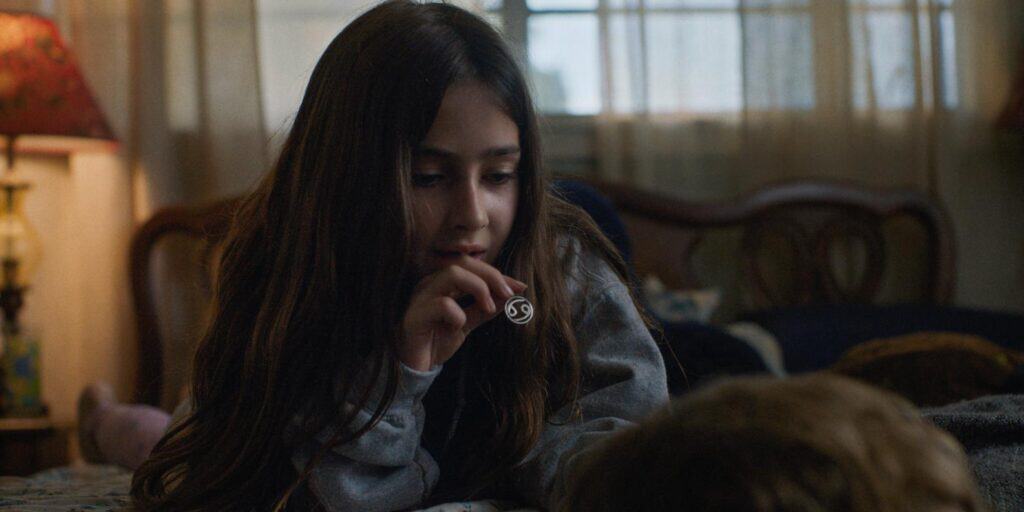
Anna Bennett
8-year-old girl — the linchpin of everything
2022 — origin
Anna follows Ellie toward the lake after an argument. She enters Found Herd Creek during the drought and is swept into the portal.
2003 — brief crossing
Paris finds Anna injured in the water. He tries to help her back to 2003 but the portal pulls them both onward.
1952 — where she stays
Anna is taken in by a local couple, grows up, takes the surname Lang, marries Benjamin Lang, and gives birth to Paris.
The little girl everyone was searching for in 2022 was already living a full life seventy years earlier — as Ellie’s grandmother.
Anna is the still point around which everything else rotates. She is eight years old, curious, a little fearless — and she has no idea what she is about to set in motion.
In 2022, after Ellie leaves following an argument, Anna follows her toward the lake alone. She reaches Found Herd Creek during the drought. She enters the water. She disappears.
What the film withholds — and what makes the reveal so quietly shattering — is where she goes. Anna doesn’t vanish into nothing. She crosses the portal, passes briefly through 2003 where Paris finds her injured, and is carried all the way back to 1952. There she is taken in, raised, and given a life she never asked for but apparently lived fully. She marries. She has a son.
That son grows up to dive into a lake looking for answers about his dead mother. He finds her instead — as a child, terrified, bleeding, in a creek in 1952 — and saves her life without knowing whose life he is saving.
Anna is Paris’s mother. Anna is Ellie’s grandmother. The little girl at the centre of the missing-person search was the woman whose absence set the whole story in motion decades before anyone started looking.
Paris Lang
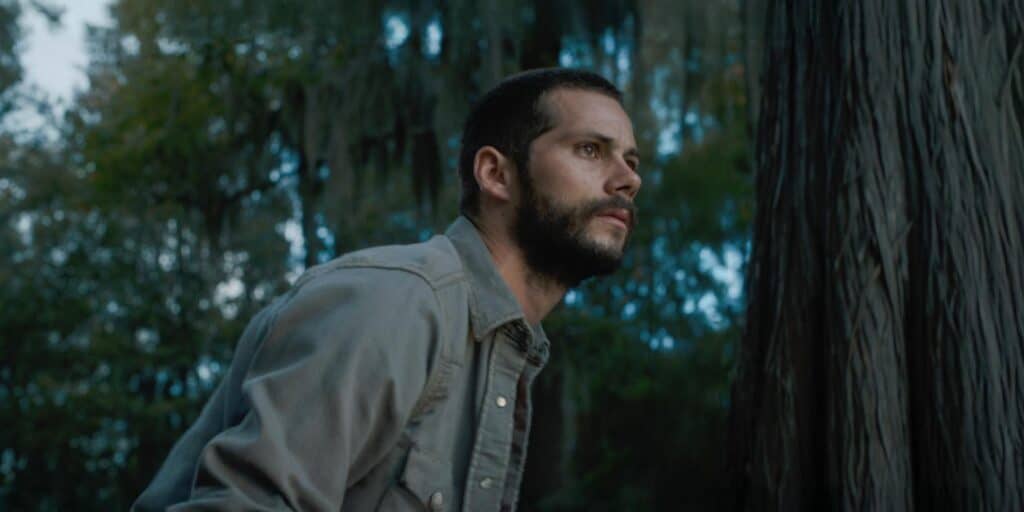
Paris Lang
Dylan O’Brien — Ellie’s missing father, Anna’s son
2003 — origin
Paris is grieving his mother’s death — Anna, who drowned during a seizure. He works dredging the lake and notices strange phenomena tied to drought water levels: footprints on the dry bed, hearing loss, his mother’s necklace in his motor.
1952 — first crossing
Paris finds young Anna wounded in the creek and helps her — not knowing she is his own mother as a child. He tries to return to 2003 but the portal misfires.
2022 — stranded
Paris surfaces 19 years in the future. Arrested on Anna’s missing boat, he pieces together the truth: the girl he saved was his own mother. He drowns when the dam floods the creek and closes the portal forever.
Paris never makes it home. Ellie grows up without a father because he was lost in time — not gone by choice.
Of all the characters in Caddo Lake, Paris carries the most weight — and Dylan O’Brien makes sure you feel every ounce of it.
Paris begins in 2003, grieving a mother he couldn’t save. His guilt is specific and physical: he was in the car. He watched her go into the water. He survived and she didn’t. The seizures she suffered — the same seizures Paris has inherited — are the thread he keeps pulling, convinced they are connected to the lake.
He is right. When the drought exposes Found Herd Creek and the portal opens, Paris crosses into 1952. He finds a small girl, wounded and alone. He helps her. He tries to return to 2003.
He ends up in 2022.
Stranded nineteen years in his own future, Paris is arrested on Anna’s missing boat — the very boat her disappearance was tied to. He pieces together the truth: the girl he saved in 1952 was his mother as a child. By rescuing her, he gave her the life that produced him. And now he is trapped in a time he doesn’t belong to, with no way back and a dam about to flood the one place that could have sent him home.
He drowns trying to escape. Not dramatically. Just — gone. A man who only ever wanted to understand why his mother died, finally understanding everything, too late.
I find Paris the film’s true emotional centre. His ending is not a twist. It is a tragedy with the particular cruelty of inevitability: he could not have done anything differently, because everything he did was always already part of the loop.
Ellie
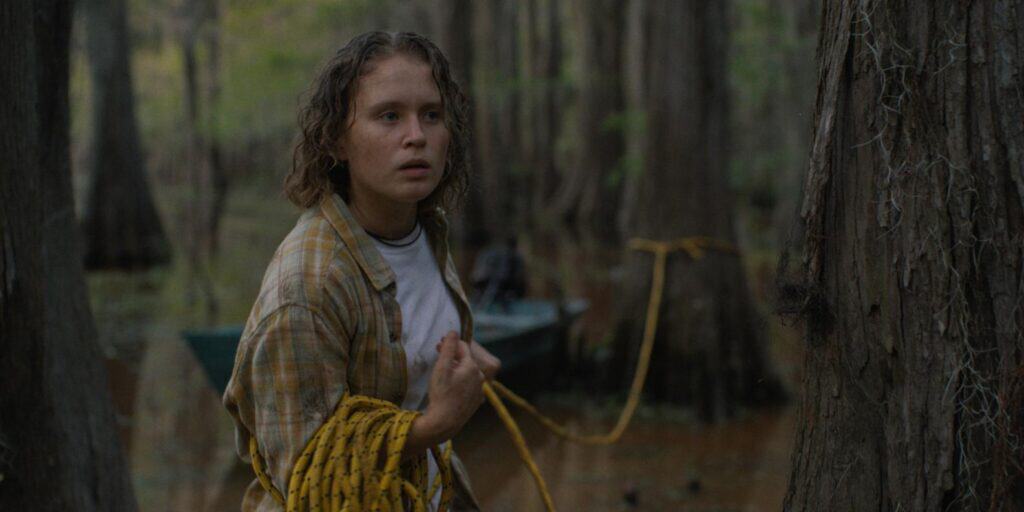
Ellie
Eliza Scanlen — Paris and Cee’s daughter, Anna’s granddaughter
2022 — origin
Ellie searches for Anna after the disappearance and inadvertently crosses the portal at Found Herd Creek.
2005 — crossing
Ellie lands in 2005 and finds a young woman named Cee holding a baby — that baby is Ellie herself. She traces Anna’s necklace and begins to understand the loop.
2022 — returns
Ellie follows the rope back through the portal just before the dam floods the creek and closes it forever. She goes home to Celeste and shows her Anna’s school photo from 1952.
Ellie must tell her mother that Anna and Paris never chose to leave — and that the little girl she was searching for was already her grandmother.
Ellie’s journey is the one the film uses to deliver its revelations — she is, in structural terms, the audience surrogate. She goes looking for answers and finds ones she wasn’t prepared for.
Starting in 2022, she enters the portal at Found Herd Creek and crosses into 2005. What she finds there is not Anna. It is a young woman named Cee — her mother, seventeen years younger — holding a baby.
The baby is Ellie.
This is the moment the film earns everything it has been building toward. Ellie stands in a supermarket car park in 2005 and looks at herself as an infant, held by a version of her mother who still has no idea what is coming. She sees Anna’s necklace. She traces it. She begins to understand.
She makes it back to 2022 through the rope she had the presence of mind to tie to her boat — a detail that also, quietly, saves Paris, who follows the rope across the portal in the other direction. The dam floods the creek. The portal closes. Ellie goes home to Celeste, and she shows her Anna’s school photograph from 1952.
What Ellie has to carry out of the film is considerable. Her stepfather Daniel is her great-grandfather. Her father didn’t leave — he was lost. And the little girl she was searching for was already gone seventy years before she was born.
Celeste
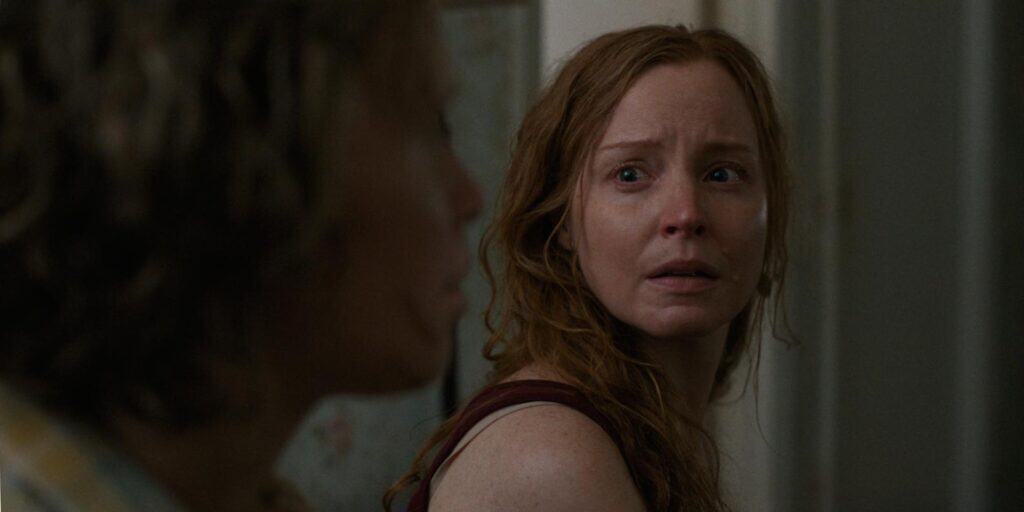
Celeste / Cee
Lauren Ambrose (2022) · Diana Hopper (2005) — Ellie’s mother
2005 — young Cee
Cee is in her early twenties, holding infant Ellie. Paris has already disappeared into the lake. She will spend 17 years believing he abandoned her and their daughter.
2022 — Celeste
Celeste watches the news when Paris’s face appears — missing, presumed drowned. Ellie returns and shows her Anna’s school picture from 1952. She understands at last.
The abandonment she carried for 17 years was never a choice. Paris was lost in the lake — just like Anna.
Celeste is the film’s quiet wound. Lauren Ambrose plays her in 2022 as a woman held together by effort — the kind of stillness that comes not from peace but from years of practice at not falling apart.
We understand why when we meet her younger self, Cee, in 2005. Cee is in her early twenties, holding infant Ellie, and Paris is already gone. He disappeared into the lake. She has been left with a daughter and no explanation — only the assumption, which hardens over the years into something like fact, that he chose to leave.
He didn’t. He was lost. The lake took him in the same quiet, indifferent way it took Anna — not with malice, just with its own logic.
The film’s final image of Celeste — watching the news, seeing Paris’s face on the screen, then turning to Ellie and the photograph — does not give her relief exactly. It gives her something harder and more valuable: the truth. He didn’t leave her. He never left.
I find that the film’s most human moment. Not the time travel, not the twist, not the closed loop. Just a woman finding out, seventeen years too late, that she was not abandoned.
One detail worth flagging — Daniel’s place in the loop:
- Daniel is Anna’s father in 2022
- Anna disappears into 1952, grows up, and has Paris
- Paris fathers Ellie with Cee around 2004–2005
- That makes Daniel → Anna → Paris → Ellie
Daniel is Ellie’s great-grandfather. The man she has been quietly resenting as a stepfather is, by the logic of the loop, three generations above her. The same household. The same dinner table.
The Family Tree Untangled
This is the section most viewers need after the credits roll. The relationships in Caddo Lake are genuinely complex — not because the film is being deliberately obscure, but because a closed time loop produces family trees that don’t behave like family trees are supposed to.
Here it is, as clearly as I can put it.
Anna Bennett is an eight-year-old girl in 2022. She disappears into the portal and ends up in 1952, where she grows up, takes the name Anna Lang, and has a son named Paris.
Paris Lang is Anna’s son — born in 1975-80 or thereabouts, living in 2003. He crosses the portal, finds his own mother as a child in 1952, saves her, and ends up stranded in 2022 where he drowns. He is also, crucially, Ellie’s biological father. He and a young woman named Cee had a daughter together before he disappeared into the lake. That daughter is Ellie.
Ellie is Paris’s daughter and Anna’s granddaughter. She grows up believing her father abandoned her. He didn’t — he was lost in the same lake that later swallowed her stepsister. She is also, in the film’s most quietly vertiginous detail, the stepdaughter of Daniel.
Daniel is Ellie’s stepfather in 2022 — the man her mother Celeste married after Paris disappeared. He is also, as the film reveals, Ellie’s great-grandfather. Paris’s grandfather. Anna’s father-in-law, in the 1952 timeline.
Celeste — known as Cee in her younger years — is Ellie’s mother. She raised Ellie alone after Paris vanished, spent seventeen years believing he left by choice, and learns the truth in the film’s final scene.
Laid out as a single paragraph, the loop reads like this:
Anna disappears from 2022 into 1952, where she grows up and has Paris. Paris grows up in 2003, crosses the portal, saves his own mother as a child in 1952 without knowing it, and ends up stranded in 2022 where he dies. Paris and Cee had Ellie in approximately 2004, just after Paris disappeared. Ellie grows up in 2022 as Anna’s stepsister — but Anna is actually her grandmother. Daniel, her stepfather, is her great-grandfather from the 1952 branch of the family.
The loop has no origin point. Anna had to disappear for Paris to exist. Paris had to cross the portal to save Anna. Ellie had to search for Anna to cross into 2005 and understand what happened. None of it could have been otherwise.
One important clarification the film is careful to make, though not loudly: there is no incest in this family tree. Anna is Ellie’s stepsister by marriage only — Daniel’s biological daughter in 2022, Anna Lang’s stepdaughter in the 1952 branch through marriage. There is no blood relation between Anna-as-stepsister and Ellie. The connection is legal and temporal, not genetic.
The film doesn’t dwell on this, and I think that’s the right call. The emotional truth of the story has nothing to do with the mechanics of the family tree. It has to do with loss, and absence, and the particular grief of not knowing whether someone left or was taken.
The Grandfather Paradox — and Why Caddo Lake Sidesteps It
Anyone who thinks about time travel long enough eventually arrives at the grandfather paradox: if you travel back in time and accidentally prevent your own grandfather from existing, you couldn’t have been born — which means you couldn’t have traveled back in time — which means your grandfather survives — which means you are born — and so on, forever.
Caddo Lake walks straight into this territory and quietly steps around it.
Paris travels back to 1952 and saves a young girl named Anna. That girl grows up to become his mother. Which means Paris’s existence depends on a journey he could only take because he already existed. There is no paradox here in the traditional sense — no moment where the loop could be broken, no action Paris could take that would erase him from history. The loop is closed and self-consistent. Everything that happens had to happen, because it already did.
This is what physicists and philosophers call a bootstrap paradox — or a causal loop. Information or events with no clear origin point, existing because they always existed. Anna doesn’t need an external cause to end up in 1952. She ends up there because she always ended up there. Paris saves her because he always saved her.
It is a neater solution than most time travel films manage. And it is also, quietly, the thing that makes the film’s tragedy so complete: no one could have done anything differently. The loop doesn’t allow for it.
The Ending Explained
The final act of Caddo Lake moves quickly — almost startlingly so, given how patient the first hour is. Once the pieces start falling into place, the film doesn’t linger. It trusts you to feel what it doesn’t say out loud.
Here is what happens, and what it means.
Paris in 2022
Paris has crossed from 1952 into 2022 — stranded, disoriented, and in possession of Anna’s missing boat, which the police have been searching for since her disappearance. He is arrested almost immediately. He cannot explain where he has been, who he is, or why he has the boat. From the outside, he looks guilty of something.
In the hospital where he is taken after injuring himself trying to escape, Paris has the time to think. And he works it out. The girl he found in 1952 — small, injured, alone — was his mother. Not a stranger. Not a coincidence. His mother, as a child, seventy years before she gave birth to him. By carrying her out of that creek and handing her to a local couple, he gave her the life that produced him. He saved her. He saved himself. He saved Ellie.
The directors have spoken about this moment in interviews — that Paris’s realisation was always meant to be bittersweet rather than triumphant. He gets the closure he has been searching for since the film opened: he knows now that his mother’s death was not something he could have prevented, because her life was something he made possible. The guilt he has carried since the bridge dissolves.
But he is still stranded in 2022. And the dam is about to release.
When Paris jumps from the bridge into the lake in an attempt to escape the police and find his way back through the portal, the dam has already flooded Found Herd Creek. The portal is closed. The water level is too high. There is no way through.
He drowns.
It is one of the more quietly devastating endings in recent genre cinema — not because it is unexpected, but because it is so completely in keeping with the film’s logic. The loop required Paris to cross the portal. It did not require him to survive.
Ellie returns
While Paris is navigating 2022, Ellie is making her way back from 2005. The rope she tied to her boat before crossing the portal becomes her lifeline — literally. She follows it back through Found Herd Creek and returns to 2022 just before the dam releases and the portal closes permanently.
The rope is also, quietly, what connects her to Paris. He follows it from the other direction — across timelines — and it is the physical link between their two crossings. Two people from different eras, connected by a piece of rope on a boat, each making their way through a portal that is about to disappear forever.
Ellie makes it. Paris doesn’t.
The photograph
Ellie goes home to Celeste. And she brings something with her: Anna’s school photograph from 1952.
This is the image that closes the film. Celeste has just seen Paris’s face on the television news — missing, presumed drowned, wanted for questioning in Anna’s disappearance. She is in shock. She turns to Ellie.
And Ellie shows her the photograph of a girl named Anna Lang, taken in 1952, who looks exactly like the eight-year-old who vanished from their family three days ago.
The film does not explain what Celeste does with this information. It doesn’t need to. What the photograph tells her — what it tells us — is that Anna did not simply disappear. She went somewhere. She had a life. She grew up, got married, had a son, and that son loved a woman named Cee and they had a daughter named Ellie, who is standing in this kitchen right now holding a seventy-year-old photograph of her grandmother as a little girl.
And Paris — the man Celeste spent seventeen years believing had abandoned her and their daughter — was lost in the same lake. Not gone by choice. Just gone.
I find the restraint of this final scene almost unbearable in the best possible way. No score swelling to tell you how to feel. No tearful speech. Just a photograph, a mother, and a daughter who has just come back from the past to tell her the truth.
What Caddo Lake Is Really About
Strip away the time travel and the family tree, and Caddo Lake is a film about one thing: the difference between being left and being lost.
Every character in this story carries the weight of an absence they misread. Celeste spent seventeen years believing Paris chose to leave. Ellie grew up without a father she assumed didn’t want her. Paris spent years drowning in guilt over a mother he thought he had failed to save.
None of it was what it looked like. The lake didn’t take these people out of cruelty or indifference. It took them because the loop required it — and the loop required it because the love was already there, already real, already worth preserving.
That’s the film’s quiet argument: that some losses are not losses at all. Just detours too long to survive.
Similar Films to Caddo Lake
If Caddo Lake left you wanting more — the slow-burn structure, the non-linear reveal, the supernatural that never quite explains itself — these are worth your time. Also check out our full guide to time loop and time travel movies like Caddo Lake.
Dark (Netflix, 2017–2020) — The gold standard for closed time loop storytelling. If Caddo Lake whetted your appetite, Dark will consume you entirely. Three seasons, one German town, and a family tree that makes this one look simple.
Coherence (2013) — A dinner party, a comet, and parallel timelines bleeding into each other. Made for almost nothing, unsettling for days.
Picnic at Hanging Rock (1975) — No time travel, but the same atmosphere of beautiful, indifferent nature swallowing people whole and offering no explanation.
The Endless (2017) — Two brothers return to a cult compound and find time itself behaving strangely. Eerie, low-budget, and surprisingly moving.
Predestination (2014) — The closed loop taken to its absolute logical extreme. Watch it after Caddo Lake while the feeling is still fresh.
If you’re into untangling Netflix mysteries, we also broke down The Last House’s creatures, rain, and ending — another 2026 release that left people with more questions than answers.