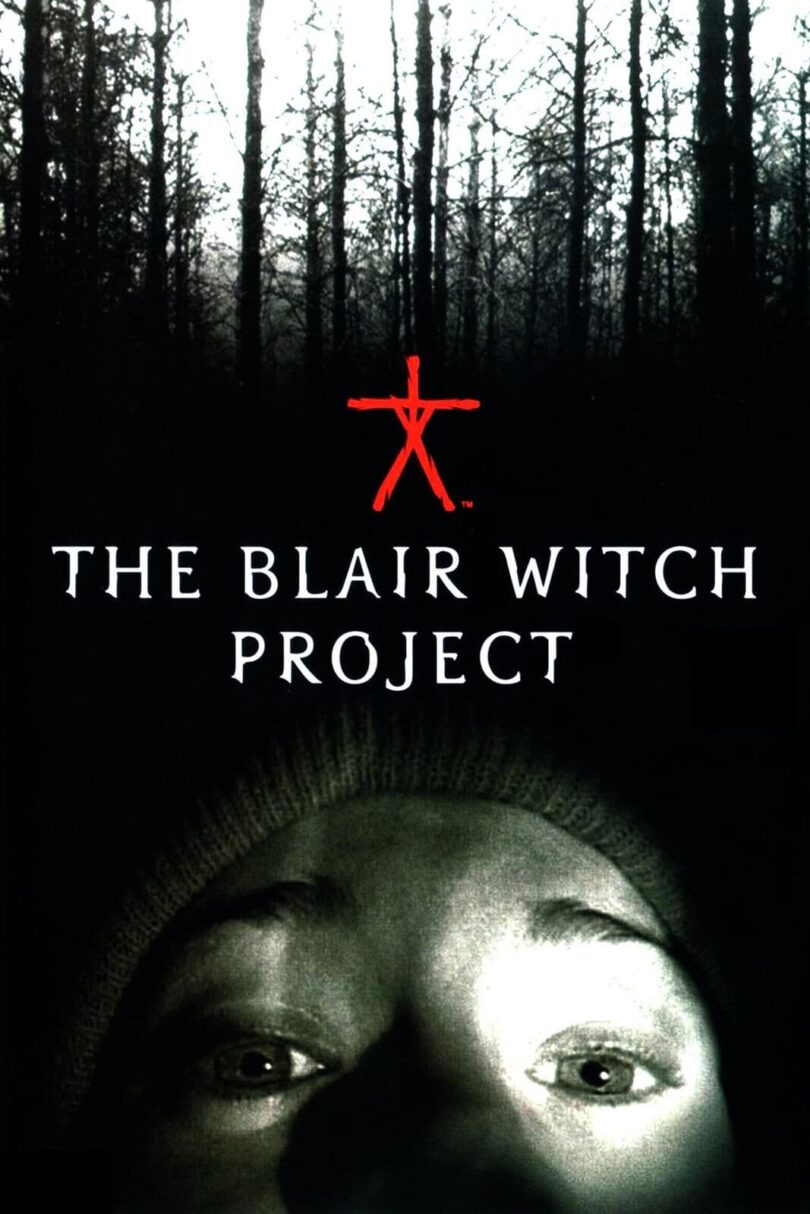
This piece expands on our original German review — updated and rewritten for our English audience.
This is the one. The film that started it all — or at least, the film that made the rest of this site possible. Before The Blair Witch Project, found footage was a curiosity, a technique that existed at the fringes. After it, the genre was unstoppable. Hundreds of films, dozens of imitators, an entirely new vocabulary for horror. All of it traces back to three film students, eight days in the Maryland woods, and a $35,000 budget that somehow earned $248 million.
I’ve been meaning to write this review for a long time. It feels right to finally do it properly.
The Blair Witch Project (1999)
The Story: On 21 October 1994, three film students — Heather Donahue, Joshua Leonard, and Michael Williams — enter the Black Hills Forest near Burkittsville, Maryland to shoot a documentary about the local legend of the Blair Witch. They were never seen again. A year later, their footage was found.
🎬 Our opinion: A milestone. Not just in found footage — in horror, in independent filmmaking, in how films can be marketed and experienced. It is slow, it shows you almost nothing, and it is one of the most frightening films ever made. Every found footage film that came after it exists in its shadow.
Director: Daniel Myrick, Eduardo Sánchez · Cast: Heather Donahue, Joshua Leonard, Michael C. Williams
Watch it
Powered by JustWatchWhat The Blair Witch Project Is About
Three film students go into the woods. They don’t come back. A year later, their footage is recovered — 81 minutes of video and 16mm film that documents what happened to them in the days before they disappeared.
Heather is the director. She’s the one with the camera, the one pushing the project forward, the one who insists they keep filming even when the others want to stop. Josh handles the 16mm camera. Michael is along for the sound. Together they walk into the Black Hills Forest near Burkittsville, Maryland, following the trail of a local legend: the Blair Witch, a supernatural entity blamed for disappearances and child murders stretching back two centuries.
They interview locals. They find the cemetery. They go deeper into the forest. And then things start to go wrong — slowly at first, then all at once. Voices in the night. Stick figures hanging from the trees. Stones arranged outside the tent in the dark. The map disappears. They walk for hours and end up back where they started. They are lost in a forest that does not seem to want them to leave.
That is the entire film. No monster. No explanation. No resolution. Just three people in the dark, and the terrible sense that something is out there with them.
The Blair Witch Project Trailer
Review: The Blair Witch Project (Spoiler-Free)
I still remember the feeling of watching this for the first time. That particular kind of unease that settles in somewhere around the midpoint and never really leaves — not while the film is running, not immediately after, not for a while. The Blair Witch Project did something to me that no horror film had done before it. And I have spent a significant portion of the intervening years trying to understand exactly how it did it.
The answer, I think, is that it understood something fundamental about fear. Real fear — the kind that keeps you awake, that lodges in the back of your mind — is almost never about what you see. It’s about what you don’t see. What you imagine. What the darkness might contain. Every great horror film knows this, but most of them eventually give in to the temptation to show you something. The Blair Witch Project never does. It shows you trees. It shows you three frightened people. It shows you darkness and the sounds that come out of it. And it lets your imagination do the rest.
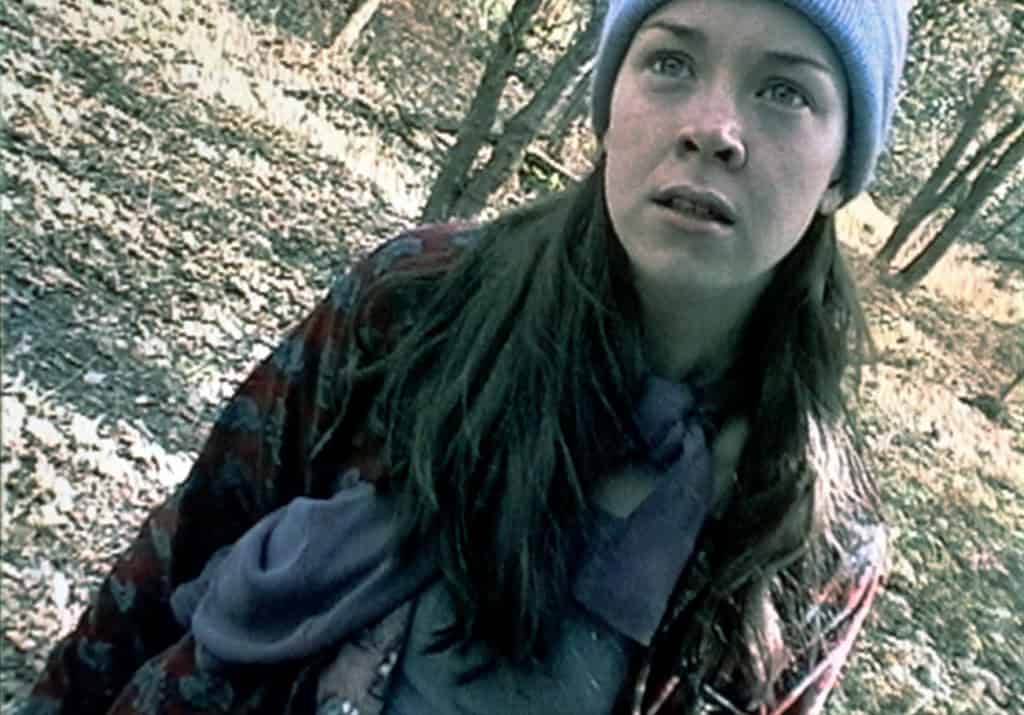
The first-person perspective is central to this. In 1999, this was genuinely unusual — the ego-camera approach had existed before, but never like this, never so committed, never so convincing. Watching the film is less like watching a horror movie and more like being inside one. When Heather is running through the forest at night, the camera shaking, her breathing ragged, and something crashing through the undergrowth behind her — you are not watching that happen to someone else. You are there. That distinction matters enormously.
What makes it work is the authenticity of the performances. Heather Donahue, Joshua Leonard, and Michael Williams are not acting in any conventional sense. They are reacting — to the cold, to the exhaustion, to the fear, to each other. The arguments feel real because they were real. The tension between the three of them as the situation deteriorates is not scripted conflict — it is three people at the end of their rope, and it shows. By the time the film reaches its final act, you have spent so long with these three people in these conditions that their terror feels personal.
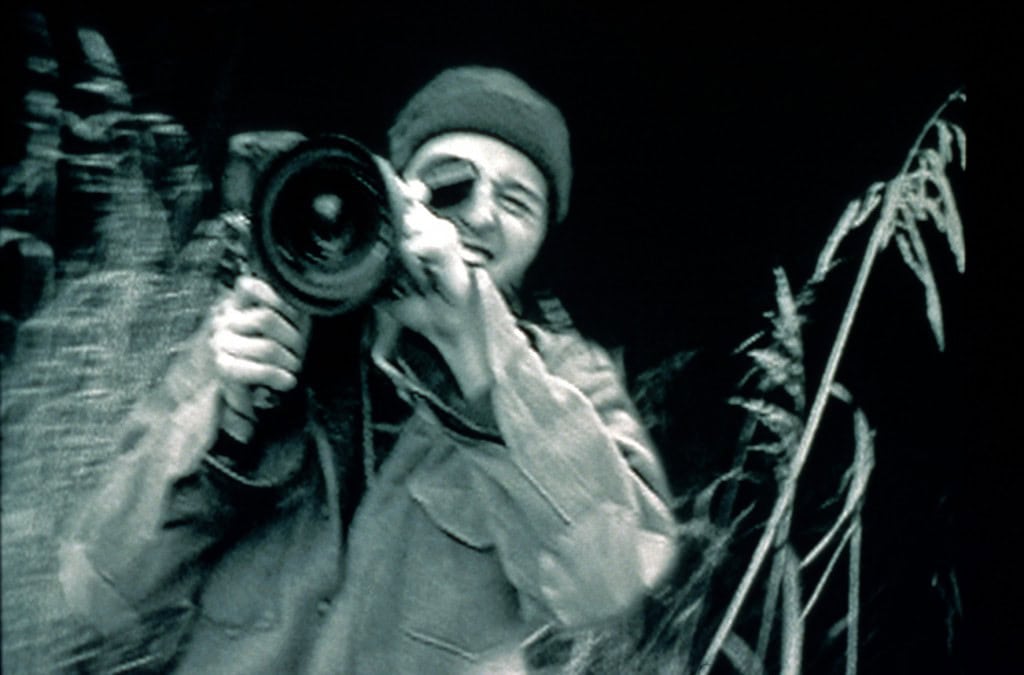
The question people always ask is: does it still work? After twenty-five years, after hundreds of found footage films have followed in its footsteps, after the mystery of it has long since been solved — can it still scare you?
Yes. Not in the same way as 1999 — the context has changed too much for that. But the film’s underlying mechanics are as effective as they ever were. The atmosphere is irreproducible. The sound design is extraordinary. And that final scene — which I will not describe here, and which you should experience without knowing what’s coming — remains one of the most purely frightening images in horror cinema. Nothing is shown. Everything is implied. Your imagination fills in the rest, and whatever it conjures is almost certainly worse than anything a $35,000 budget could have put on screen.
There are imperfections — a handful of cuts that feel slightly off, a couple of moments where the seams show — but they barely register against the weight of what surrounds them. This is a film that earns its reputation completely.
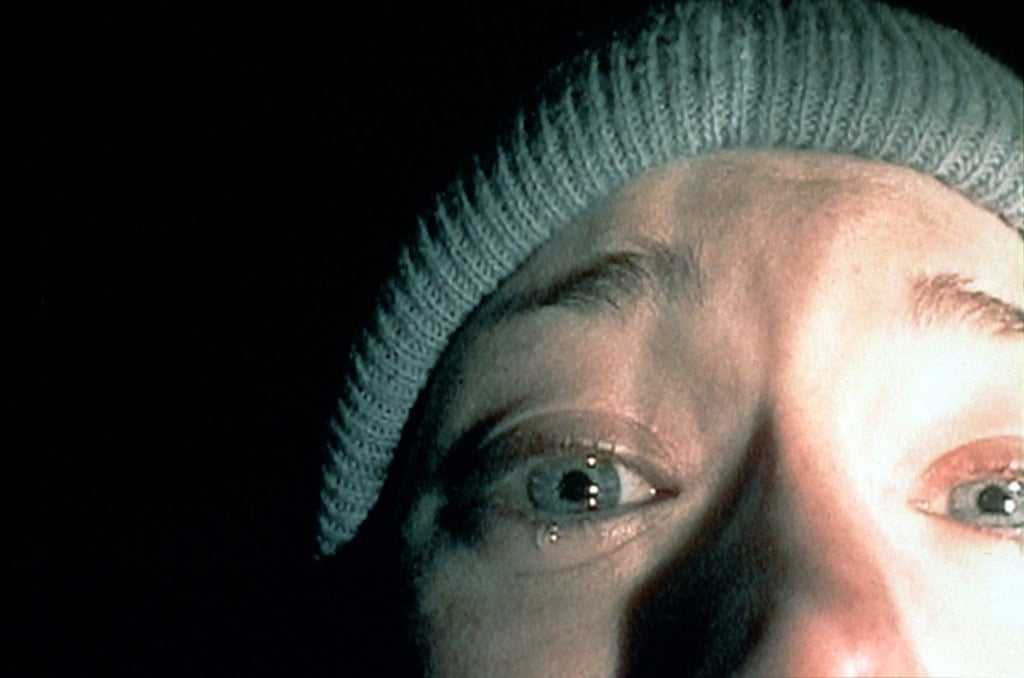
Did you know?
The shoot was eight days. The footage was real fear. Directors Daniel Myrick and Eduardo Sánchez sent their three actors into the woods of Seneca Creek State Park, Maryland with cameras, a GPS device, and a walkie-talkie for emergencies — and almost nothing else. There was no traditional script: the directors left handwritten notes at GPS waypoints each day, giving the actors their instructions for the next scene. Dialogue was entirely improvised. To keep tensions authentic, the production deliberately reduced the actors’ food rations — they survived largely on Power Bars and bananas. At one point, Joshua Leonard was rewarded with a meal at Denny’s (and later a Jane’s Addiction concert) while the others remained in the woods. The actors got genuinely lost at least three times, including during scenes where their characters are lost. The safe word on set was “taco.”
The marketing campaign invented viral horror. Before the film premiered at Sundance in January 1999, Myrick and Sánchez built a website presenting the Blair Witch legend — and the students’ disappearance — as entirely real. It included fabricated police reports, missing person posters, and interviews with fictional investigators. At the Sundance premiere, flyers were distributed to audience members declaring the three actors missing. The IMDb page listed them as “deceased.” The three actors were required to stay out of public view for months to sustain the illusion. The campaign was so effective that Artisan Entertainment, which bought the film for $1.1 million after Sundance, later surveyed audiences and found that 50% of viewers believed the footage was real. People sent condolences to the actors’ families. When the film crossed $100 million at the box office, the three actors — who had each been paid $1,000 a day for eight days of shooting — were sent a fruit basket.
The numbers are almost incomprehensible. Shot for approximately $35,000 — with around $25,000 of that going to the actors — The Blair Witch Project earned $248.6 million worldwide at the box office. It holds a Guinness World Record for the highest ratio of box office gross to budget in film history. It was not the first found footage film — Cannibal Holocaust (1980) and The McPherson Tape (1989) preceded it — but it was the film that turned a niche technique into a genre, and this site, and everything on it, exists in its wake.
Verdict
The Blair Witch Project belongs in every horror collection, regardless of whether found footage is your thing. It is a milestone in the history of the genre, one of the most profitable independent films ever made, and the direct reason this site exists. Without it, none of the films reviewed here — none of the hundreds of found footage films released in the quarter-century since — would have been made.
It is slow. It shows you almost nothing. And it will stay with you long after the screen goes dark — which is exactly what the best horror films do.
Where to Watch The Blair Witch Project
Powered by JustWatchSimilar Movies to The Blair Witch Project
If The Blair Witch Project is where it starts for you — or if you’ve seen it and want to follow the thread — these are the films that either shaped it, descend directly from it, or carry the same DNA most faithfully.
Blair Witch (2016) — Adam Wingard’s direct sequel, shot under the fake title The Woods and revealed at San Diego Comic-Con in one of horror’s great marketing stunts. Louder and more technically ambitious than the original, with a genuinely terrifying final act. Not a replacement — nothing could be — but a worthy companion. Our full review is here.
Paranormal Activity (2007) — The film that picked up where Blair Witch left off and proved the formula still worked eight years later. A couple sets up cameras in their home to document the strange things that happen in the night. Static cameras instead of handheld chaos, a suburban bedroom instead of a forest — and every bit as effective. The opening of a franchise, but the original stands alone.
REC (2007) — A Spanish television reporter and her cameraman follow a fire crew into an apartment building that goes into immediate quarantine. The found footage approach here is pure adrenaline — less atmospheric dread than Blair Witch, more relentless physical terror. One of the genre’s finest.
Hell House LLC (2015) — A documentary crew pieces together what went wrong on the opening night of a haunted house attraction in an old hotel. Closest in spirit to Blair Witch in terms of the slow-burn, atmosphere-first approach. Builds dread the old-fashioned way — by making you feel that something is fundamentally wrong from the first scene, then confirming it gradually.
Trollhunter (2010) — Norwegian film students follow a government agent who turns out to be hunting actual trolls. Sounds absurd; plays completely straight. One of the most inventive found footage films of the decade after Blair Witch, and proof that the format works equally well for wonder as for horror. Our full review is here.