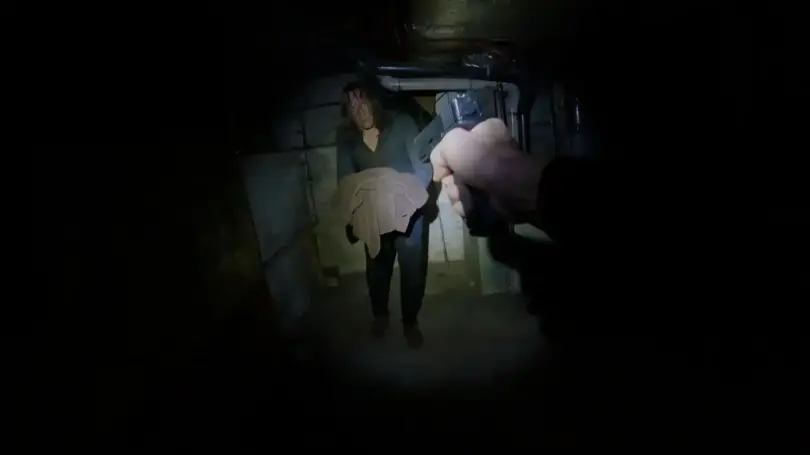
Bodycam solves a problem found footage has struggled with for two decades: why does anyone keep filming? Strap the camera to a cop who legally can’t turn it off, and the question disappears. What’s left is a film about two officers trying to erase what their own cameras recorded — and a debt that comes due anyway.
If that’s what stuck with you — the cover-up, the camera you can’t escape, the sense that something is collecting on what happened — the films below share that DNA. Some are closer in format. Some are closer in theme. All of them are worth your time.
Btw, if you’re still working through what actually happened at the end of Bodycam, check our review and the full ending explained, with infographic.
At a Glance
| Film | Year | Format | Why It's Similar |
|---|---|---|---|
| End of Watch | 2012 | Found Footage | Same body-camera format Bodycam borrows directly |
| [Rec] | 2007 | Found Footage | Emergency crew, cameras rolling, cornered by something supernatural |
| Hell House LLC | 2015 | Found Footage | A cover-up that hides something much worse |
| Late Night with the Devil | 2023 | Mockumentary | A deal with something demonic, paid the hard way |
| Incantation | 2022 | Found Footage | A curse that spreads from person to person |
| His House | 2020 | Conventional | An old debt, finally collected |
| As Above, So Below | 2014 | Found Footage | Same vibe — a descent into supernatural chaos that's hard to fully explain |
| Hardcore Henry | 2015 | POV / Action | Non-stop, first-person chaos from start to finish |
8 Movies to Watch After Bodycam
Some of these share the format — a camera nobody can turn off. Some share the theme — a debt that gets collected whether you agree to it or not. A couple share both.
End of Watch (2012)

Two LAPD partners, Brian Taylor and Mike Zavala, patrol South Central Los Angeles — most of it filmed through Taylor’s own handheld camera and the cameras clipped to their uniforms. They confiscate money and guns from a cartel during a routine stop. The cartel doesn’t forget. Take a look at our full review for more info.
Why it’s similar to Bodycam: This is the film Bodycam’s own team pointed to directly — reportedly pitched as “End of Watch meets Event Horizon.” Same setup: two partners, cameras attached to their bodies rather than held, the day-to-day rhythm of the job filling the screen before anything goes wrong.
What sets it apart: No supernatural element here — the horror is entirely human, entirely earned. Gyllenhaal and Peña’s chemistry carries the film, and the danger is a cartel, not a demon in a hole. If Bodycam’s first act was your favorite part, this is what a whole film built on that register looks like.
Where to watch:
[Rec] (2007)

A TV reporter and her cameraman join a fire crew responding to a call in a Barcelona apartment building. Within minutes, the building is sealed by the authorities and nobody inside is getting out — including the emergency responders who came to help.
Why it’s similar to Bodycam: Same structure — professionals whose entire job is responding to emergencies get trapped by the emergency itself, cameras rolling the whole way down. What starts grounded and procedural tips into something the characters have no framework for, exactly like Bodycam’s descent from domestic call to the hole in the cellar.
What sets it apart: Real-time, single-location, and relentless — [Rec] barely lets up once the doors are sealed. It’s tighter and faster than Bodycam, with less ambiguity about what’s actually happening, even if the why stays murky until the very end.
Where to watch:
Hell House LLC (2015)

Five years after fifteen people died on opening night of a Halloween haunted house attraction, a documentary crew goes back to find out what the official explanation left out. What they find in the footage is a lot stranger than a malfunction.
Why it’s similar to Bodycam: Both films are built on the same gap — the story that got told publicly, and the footage that shows what actually happened. In both cases, the truth was buried on purpose, and in both cases, digging it back up doesn’t go well for the people doing the digging.
What sets it apart: Hell House LLC takes its time — this is a slow-burn, patient build rather than Bodycam’s 75-minute sprint. The haunted-house setting also gives it a different texture: less police procedural, more mockumentary dread.
Where to watch:
Late Night with the Devil (2023)

A live TV broadcast in 1977 sets out to boost ratings with a séance. It works, in the worst possible way — and unleashes something into the audience’s living rooms that nobody on set is equipped to put back. Interested? Here is our full review.
Why it’s similar to Bodycam: Both films center on a deal with something demonic that nobody explicitly agreed to — and both make clear that the price gets set by the entity, not the person who owes it. If “the debt” is what stayed with you from Bodycam, this is the same idea from a completely different angle.
What sets it apart: No found footage here — it’s framed as a lost broadcast tape instead, which gives it a completely different texture: warmer, funnier at first, and all the more unsettling once it turns. David Dastmalchian’s performance as the host carries the entire film.
Where to watch:
Incantation (2022)

Six years after breaking a religious taboo and being cursed for it, a mother tries to protect her young daughter from the consequences — while directly addressing the camera and asking the viewer to memorize a symbol and repeat an incantation along with her.
Why it’s similar to Bodycam: The curse here spreads the same way the Underman’s debt does — passed from person to person, claiming whoever comes into contact with it, with no clean way to opt out once you’re in.
What sets it apart: Incantation jumps between past and present rather than staying linear, and it leans harder into ritual and folk horror than anything police-procedural. Became the highest-grossing Taiwanese horror film ever for a reason.
Where to watch:
His House (2020)

A refugee couple escapes war-torn South Sudan and is placed in a rundown house in an English town. The house has something else living in it — and it wants something from them that goes back further than the night they arrived.
Why it’s similar to Bodycam: Not found footage, but the closest film on this list in spirit — a debt tied to a past wrong, collected in full, whether the people paying it feel they deserve it or not.
What sets it apart: Conventionally shot, emotionally heavier, and far more interested in grief and guilt than jump scares. One of the most acclaimed horror films of the last decade — if you can only watch one non-found-footage film on this list, make it this one.
Where to watch:
As Above, So Below (2014)
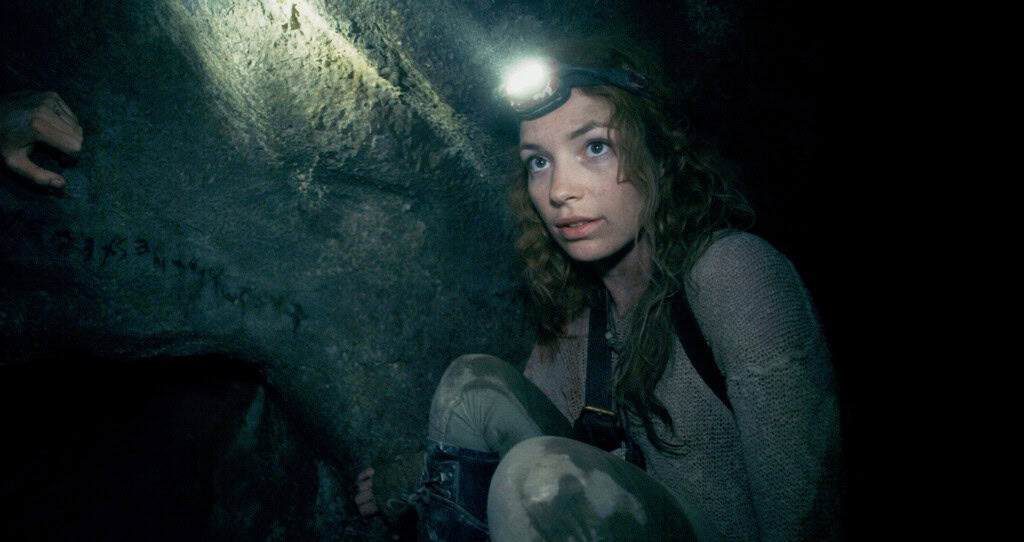
A team of explorers descends into the real catacombs beneath Paris, searching for the philosopher’s stone. The deeper they go, the less the tunnels behave like tunnels — until they’re lost somewhere that isn’t really geography anymore.
Why it’s similar to Bodycam: Same vibe — a literal descent underground that tips into supernatural chaos nobody on screen can fully explain, and reality stops making sense the further down they get, just like the hole in Bodycam’s finale.
What sets it apart: Shot in the actual Paris catacombs, which gives it a texture no set could fake. Directed by John Erick Dowdle, who also made the Quarantine remake of [Rec] — so the found-footage pedigree runs deep here too.
Where to watch:
Hardcore Henry (2015)

Henry wakes up as a cyborg with no memory and no voice, and spends the entire film — shot continuously from his own eyes via a GoPro rig — fighting his way across Moscow to save his wife from a warlord with an army of augmented soldiers.
Why it’s similar to Bodycam: Not horror, and not really found footage in the traditional sense — but the same core idea taken to its logical extreme: a camera that never leaves the protagonist’s own perspective, for the entire runtime, no matter how chaotic it gets.
What sets it apart: Pure adrenaline. Where Bodycam uses its worn-camera format for dread, Hardcore Henry uses the exact same idea for nonstop action — the most extreme demonstration of what a “camera you can’t put down” format is capable of.
Where to watch:
Which One to Watch First?
It depends on what stuck with you most about Bodycam.
If it was the camera format → End of Watch. The clearest direct influence, and the strongest version of “cameras worn, not held.”
If it was the cover-up → Hell House LLC. Same gap between the official story and the real one, stretched into a slower, more patient build.
If it was the debt itself → His House. The closest match in spirit on this entire list, even without a shred of found footage in it.
If it was the descent into something you can’t fully explain → As Above, So Below. Same shape as Bodycam’s finale — going down into a space that stops making sense.
If you just want the format pushed to its limit → Hardcore Henry. No horror, no debt, just a camera that never once looks away.
What all eight of these share with Bodycam is the same basic idea: the camera isn’t just recording the story. It’s part of what makes the story possible in the first place — and in every one of these films, that camera ends up seeing a lot more than anyone filming ever wanted it to.